 Allfishes
Northern Anchovy (Engraulis mordax)
Pinhead, North Pacific anchovy, California anchovy, bay anchovy; French: anchois du Pacifique nord, anchois de California; Spanish: anchoveta de California, anchoa del Pacific.
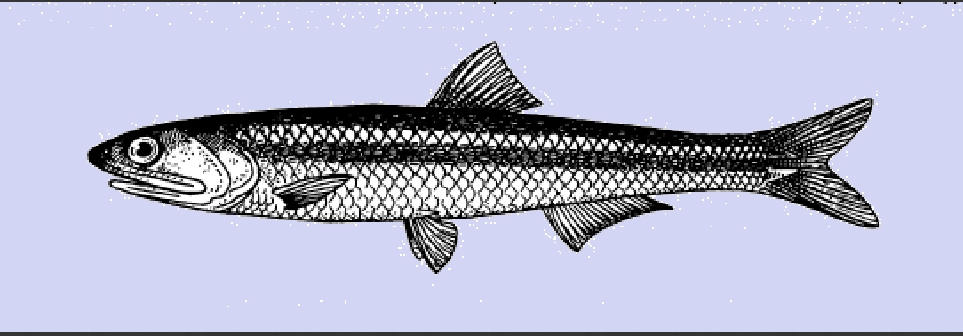
Latin name
Engraulis mordax
Other names
Pinhead, North Pacific anchovy, California anchovy, bay anchovy; French: anchois du Pacifique nord, anchois de California; Spanish: anchoveta de California, anchoa del Pacific.
Identification
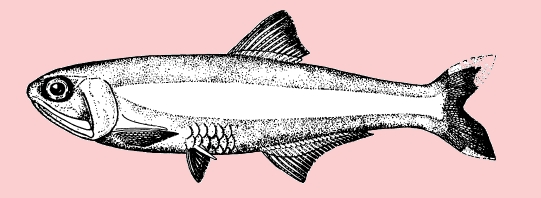
Anchovies are silvery fish that look like miniature herring. They have an overhanging snout and long mandibles that extend behind the eyes. The northern anchovy has an elongated body, 5-6 times the height of its body length. The head is long, 3.5-4 times shorter than the body length, moderately compressed from the sides.
Distribution
The northern anchovy is found in the eastern Pacific Ocean, occurring from northern Vancouver Island to Cabo San Lucas. E. mordax is found from British Columbia to Baja California, and E. mordax nanus is found in California bays.
Habitat
Northern anchovies form dense schools and prefer coastal shallows, including bays and coves.
Size
Most often, the Northern anchovy is 4-5 inches in size, but can reach 9 inches.
Life history and Behavior
Northern anchovies spawn throughout the year, but mostly in winter and early spring. Spawning occurs in nearshore and offshore areas, mostly at depths less than 33 feet and at temperatures between 50° and 55°F.
Food and feeding habits
It feeds on phytoplankton and zooplankton, sometimes on larvae and eggs.
Reproduction
Mass spawning off the California coast in late winter - early spring at water temperatures of 10-23.3 °С. Mass spawning is observed at temperatures of 13-17.5 °С in the upper layers of water. Batch spawning, with fecundity ranging from 4 to 26,000 eggs; the first batch usually makes up about 75% of all the eggs hatched.
Related species (same family)
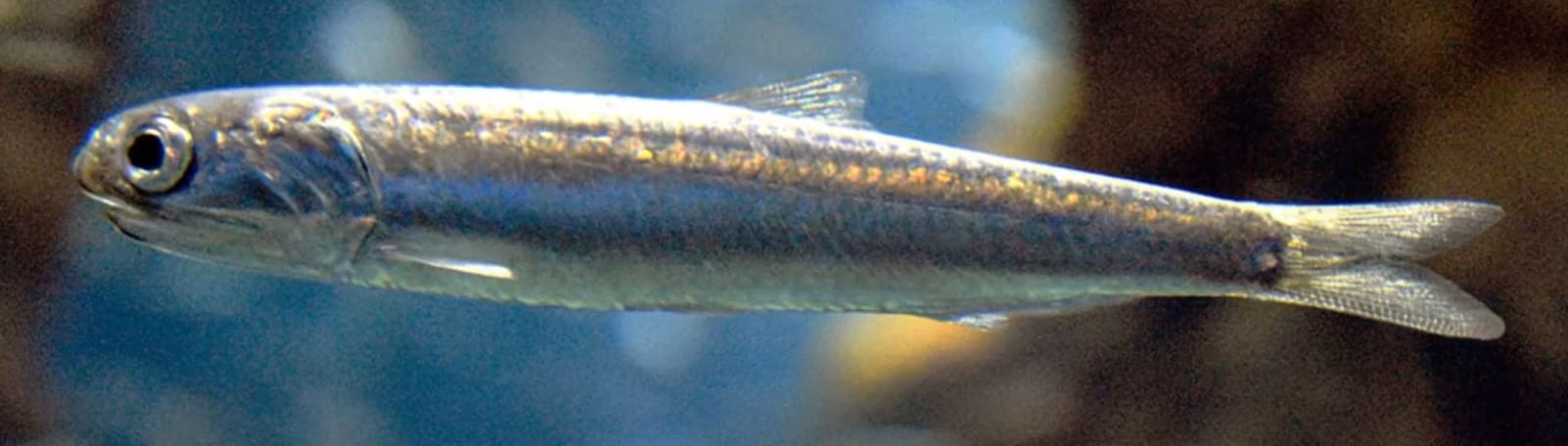
European Anchovy
Engraulis encrasicolus
Body elongated, low, covered with cycloid scales, head compressed at the sides, bare. Scales thin, easily …
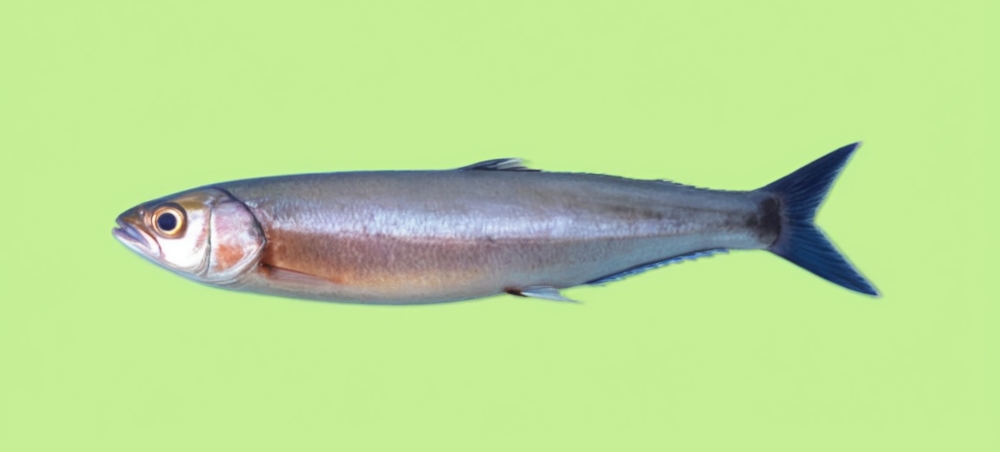
Indian anchovy
Stolephorus indicus
The body of the Indian anchovy has the typical shape of an anchovy. It is slender, …
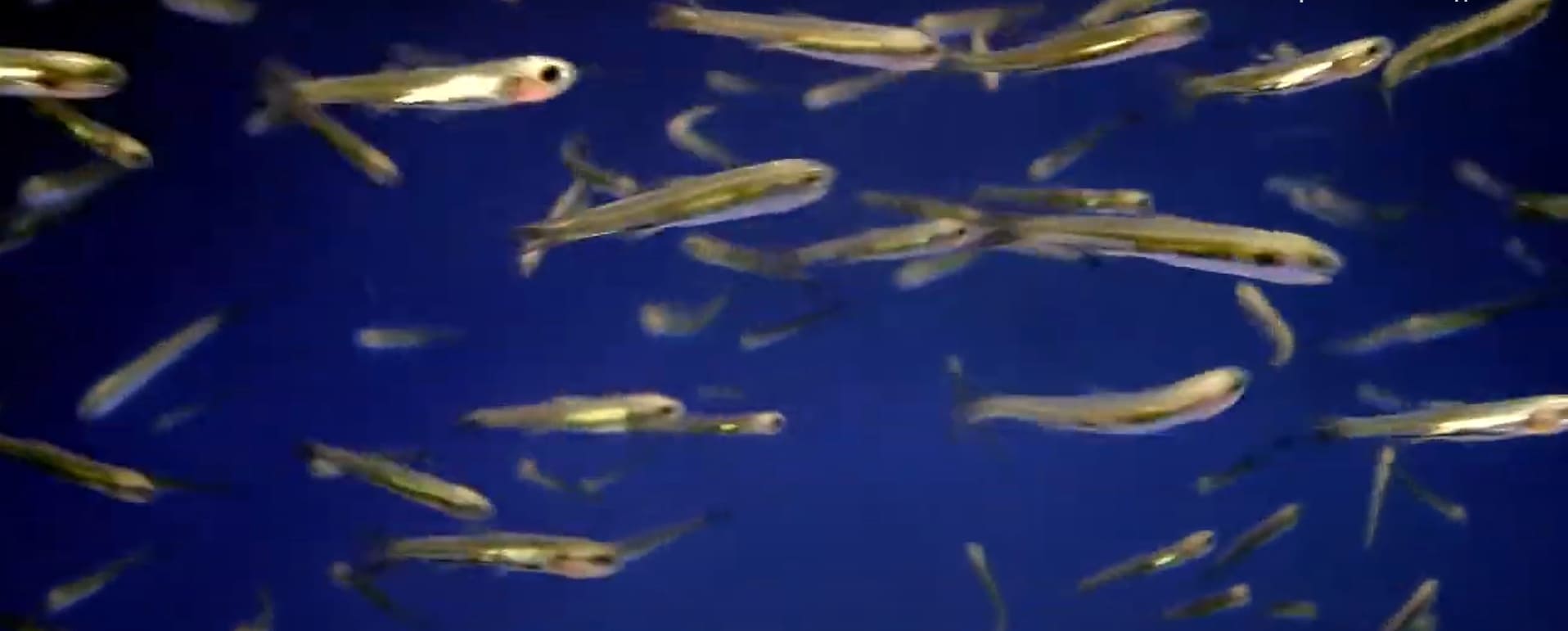
Japanese anchovy
Engraulis japonicus
Body elongated, moderately high, height 4-5 times less than length, compressed at the sides and covered …
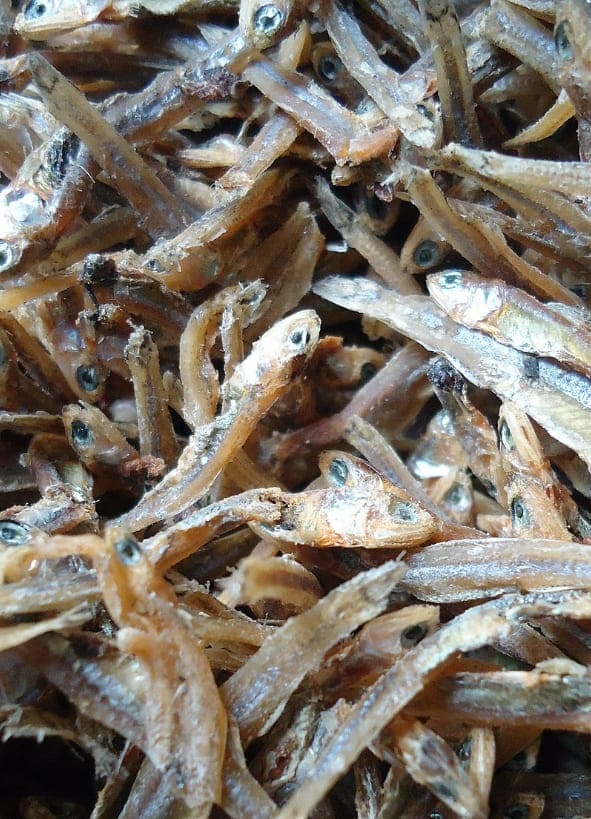
Philippine anchovy
Encrasicholina oligobranchus
This species is characterized by the following set of characters: 16-22 pseudogill spicules (16); first gill …
Striped Anchovy
Anchoa hepsetus
The striped anchovy has a ribbon-like stripe along each side and some yellow near the head. …