 Allfishes
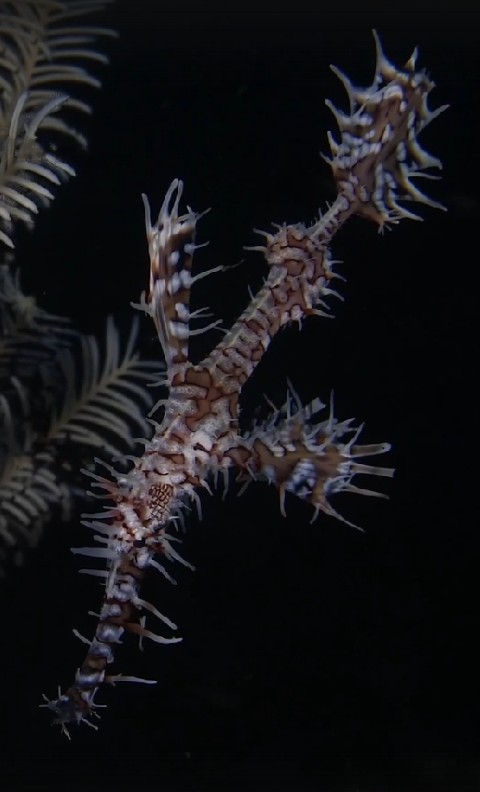
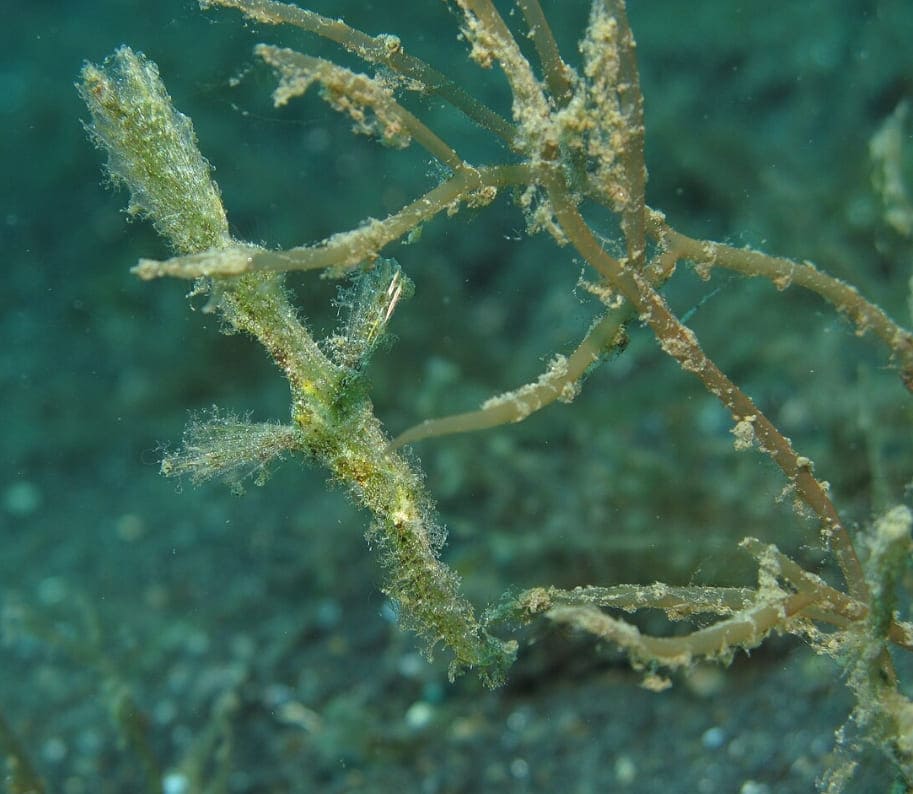
Long-tailed ghost pipefish (Solenostomus armatus)
Latin name
Solenostomus armatus
Other name
Armored ghost pipefish or armored pipefish.
Identification
Solenostomus: Greek, solen = tube + Greek, stoma = mouth. The species name comes from the Greek armatura, referring to this fish's armor of dermal plates.
Compared to other pipefish species, they have an elongated tail and leg, as indicated by their common name. Long-tailed ghost pipefish have 32-33 vertebrae. The total number of body plates is 33-35.
Features of fish fins
Dorsal spines (total): 5; Dorsal soft rays (total): 20 - 22; Anal spines: 0; Anal soft rays: 20 - 22. Fish of this species have a long tail stalk and an elongated caudal fin.
Fish colouring
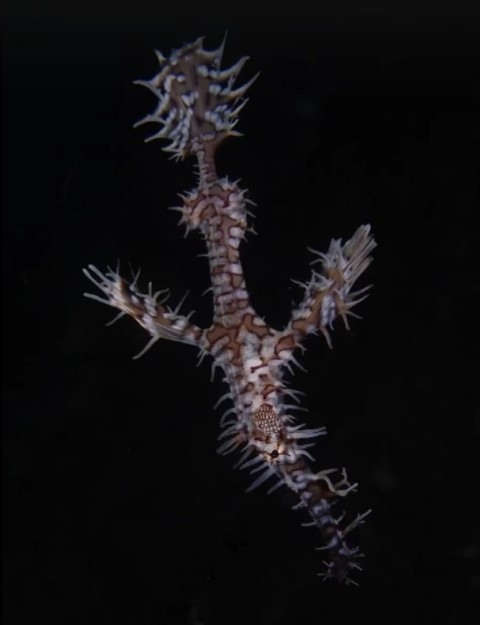
Colouration and colour patterns are highly variable: most individuals are in the dark colour phase with a dark red background covered with reticulated yellow to orange patches; some are in the light colour phase of yellow to beige with a few patches of darker pigment on the body. There are two large black spots between the first and third dorsal fin spines.
Distribution
Widespread in the western Pacific: south-east of the Kyushu Islands, from Japan to the Arafura Sea, Indonesia and Australia; east to Fiji. Also known from China.
Habitat
It is a tropical marine species that inhabits muddy bottoms close to reefs. The depth ranges from 0 to 95 metres.
Size
Males of this species reach a maximum length of 5.7 cm.
Behavior
This species does not migrate.
Food and feeding habits
It feeds on small crustaceans by sucking prey through its long snout.
Reproduction
Females lay eggs in the pelvic fins, which are modified to form a brood pouch.
Fishing
This species is not commercially important.
Relationship with a person
Harmless.
Photos
Related species (same family)
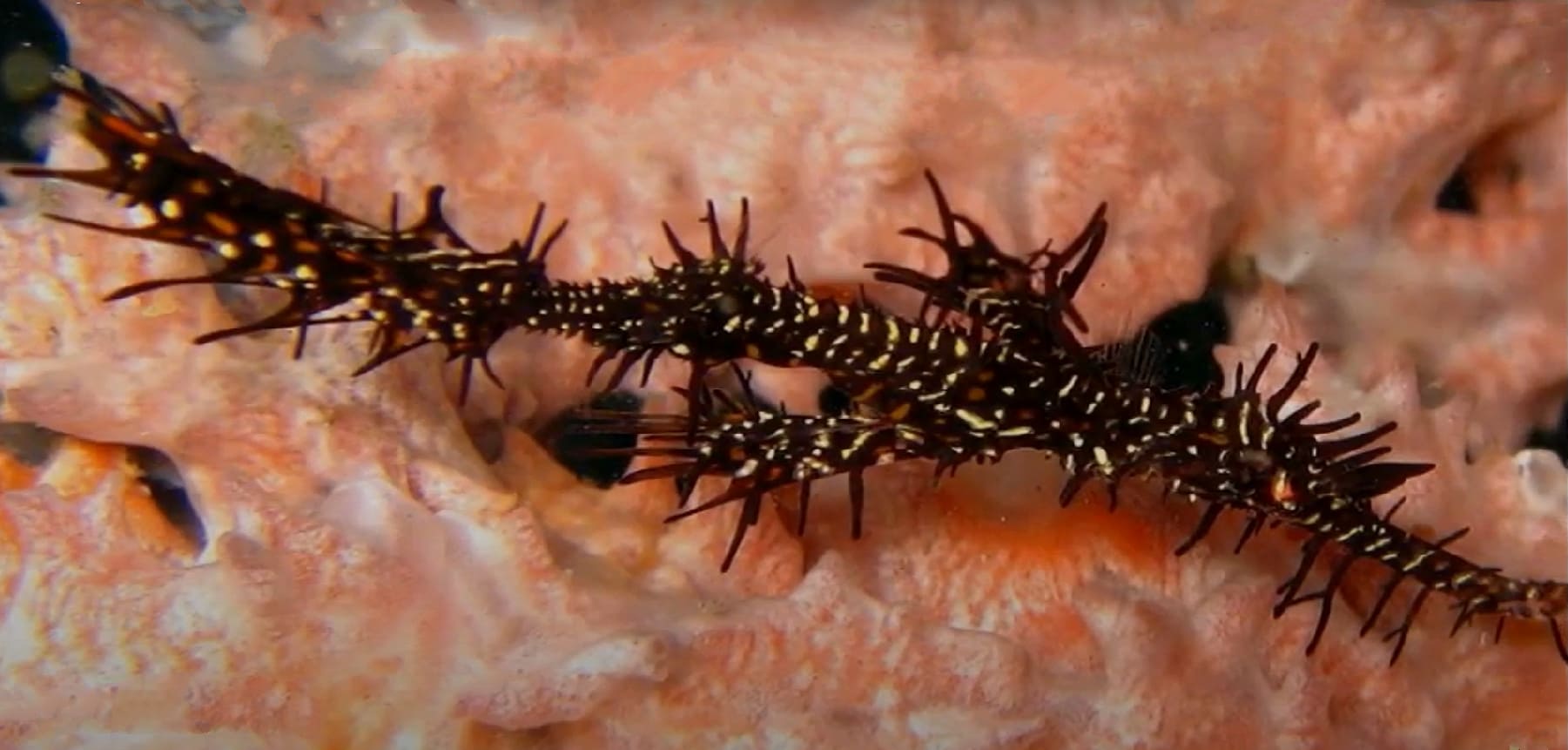
Ornate ghost pipefish
Solenostomus paradoxus
Vertebrae: 32-33. Post pelagic fishes are almost completely transparent and thinner compared to those formed in …
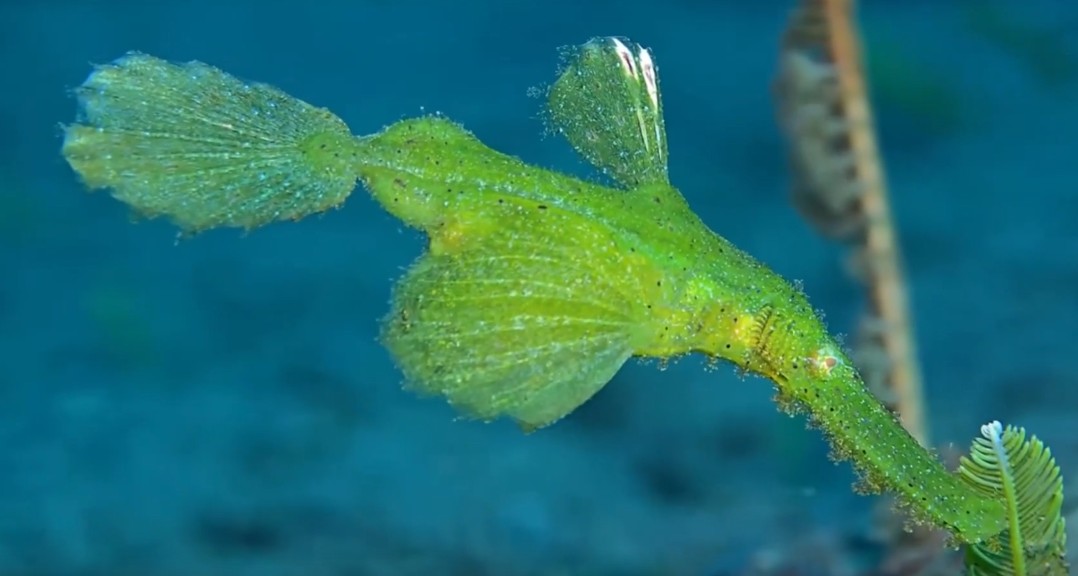
Robust ghost pipefish
Solenostomus cyanopterus
This species is a true chameleon of the underwater world. Its appearance is an ideal combination …
Roughsnout ghost pipefish
Solenostomus paegnius
This species usually has protruding filamentous projections along the ventral surface of the snout, and may …