 Allfishes
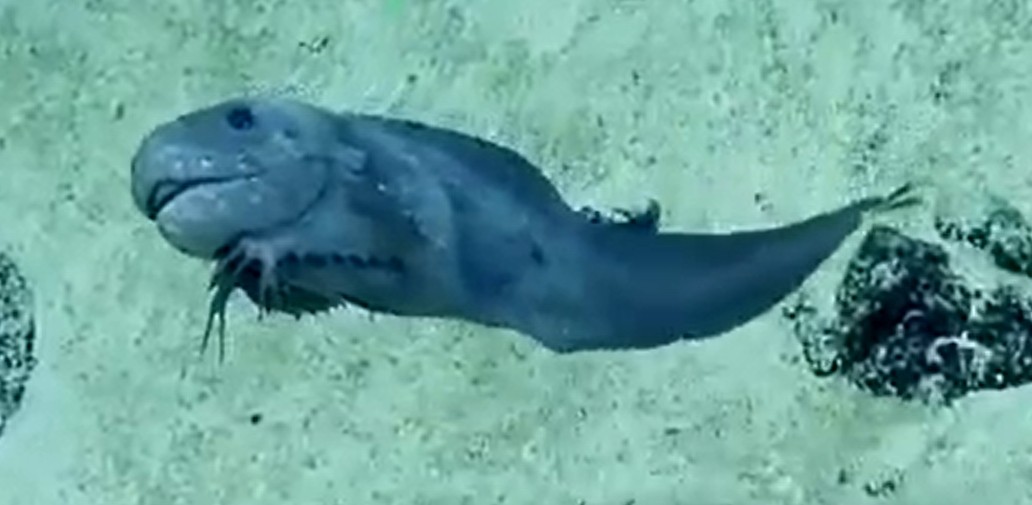
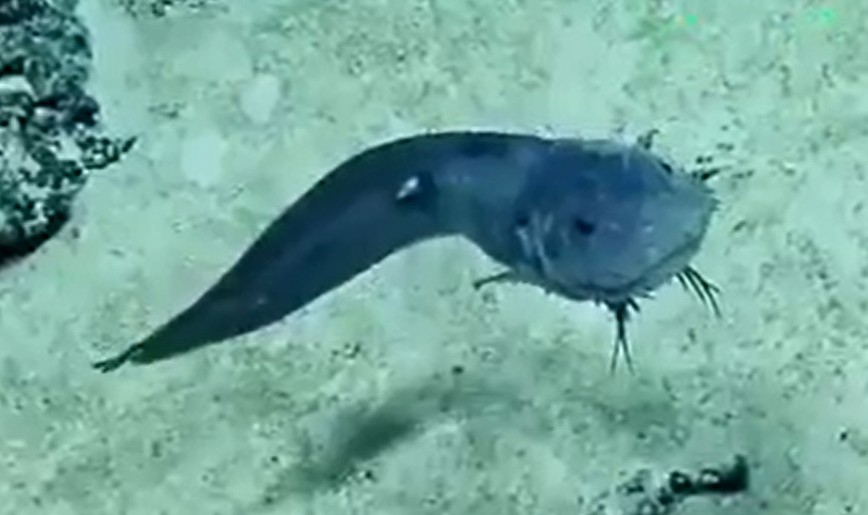
Broad-mouth tadpole (Careproctus latiosus)
Latin name
Careproctus latiosus
Identification
The broad-mouth tadpole can be identified by the following characteristics:
59-60 vertebrae
Two pairs of weak pleural ribs
Three to four rounded thoracic radii
A body that is 4.6-4.9 times as deep as the standard length
A head that is 26-27% of the body length
A broad snout
An occipital pore and one supraorbital pore
Small eyes
A large mouth with the corner of the mouth below the center of the eye
Simple teeth
A nose that is 36-40% of the body length
A disc that is 6.3-6.6% of the body length
Features of fish fins
Dorsal soft rays (total): 52. The lower pectoral fin blade is shorter than the upper one.
Fish colouring
The Broad-mouth tadpole has a pale body and a black peritoneum.
Distribution
It is widespread in the Arctic Ocean: Norwegian Sea.
Habitat
This marine bathydemersal species inhabits depths ranging from 1,478 to 1,695 meters.
Size
Females of this species reach a maximum length of 9.8 cm.
Behavior
These fish travel by attaching themselves to the legs or backs of crabs.
Food and feeding habits
The broad-mouth tadpole feeds on small animals.
Reproduction
This fish species' reproductive biology has not yet been studied.
Fishing
This species is not commercially important.
Relationship with a person
Harmless.
Photos
Related species (same family)
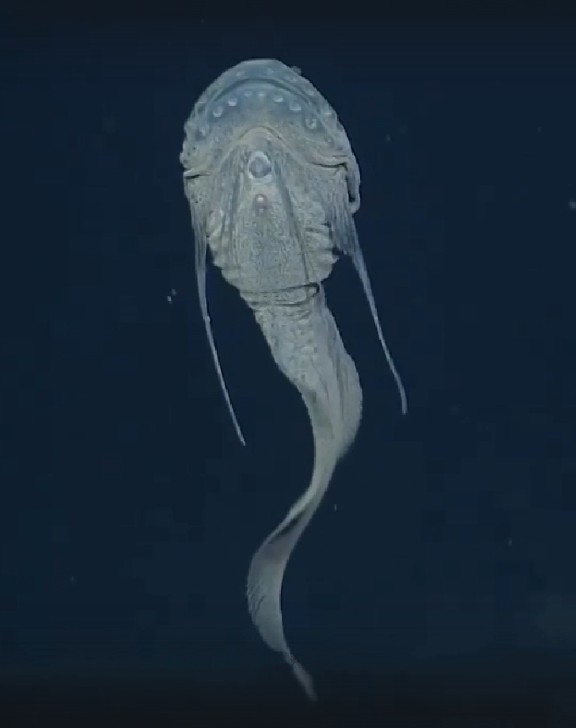
Blackhead strainer snailfish
Rhodichthys melanocephalus
The blackheads trainer snailfish is characterized by the following features:body shape: elongate;cross-section: oval;nnumber of vertebrae: 62-66;preanal …
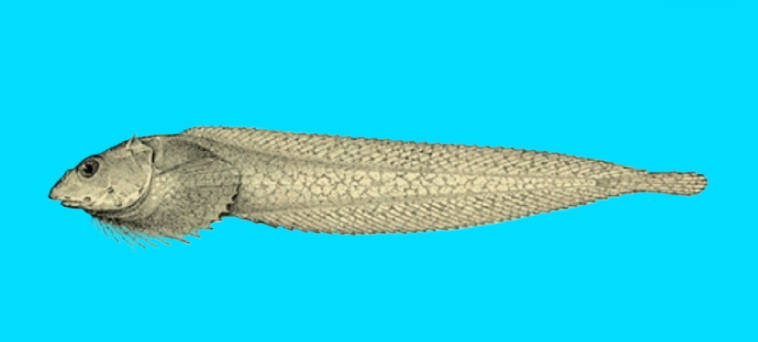
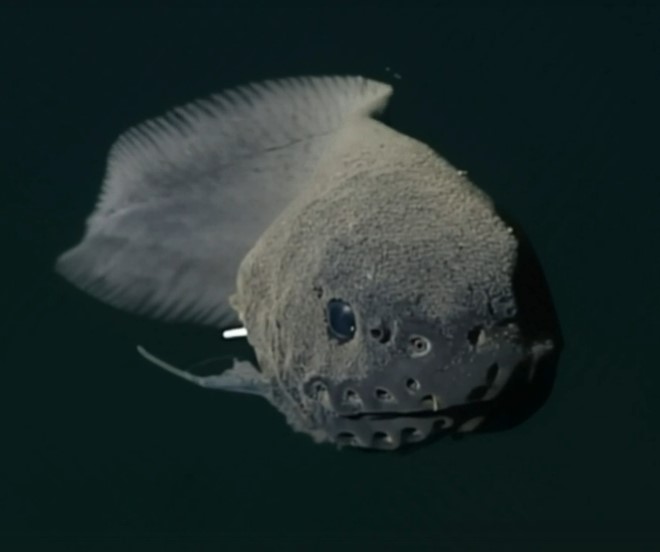
Careproctus catherinae
Careproctus catherinae
The body of Careproctus catherinae is elongated, gelatinous and without scales. The head is large compared …
Careproctus inflexidens
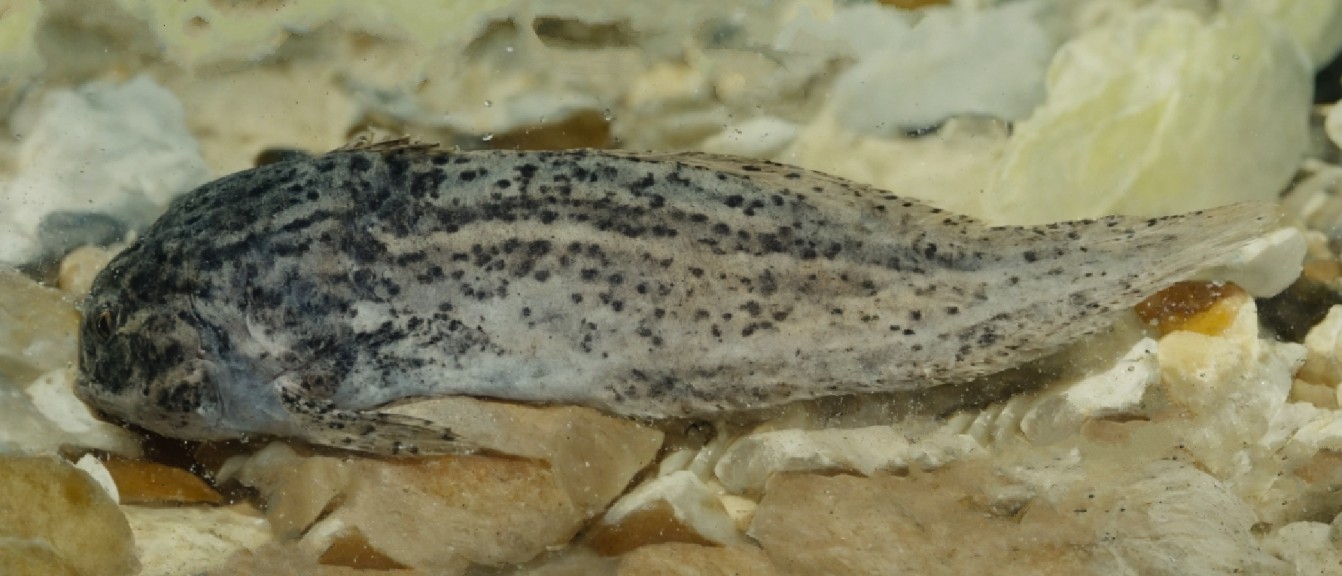
Careproctus inflexidens
Careproctus: Greek, kara = face + Greek, proktos = anus. Inflexidens: named for its recurved teeth.Careproctus …
Common seasnail
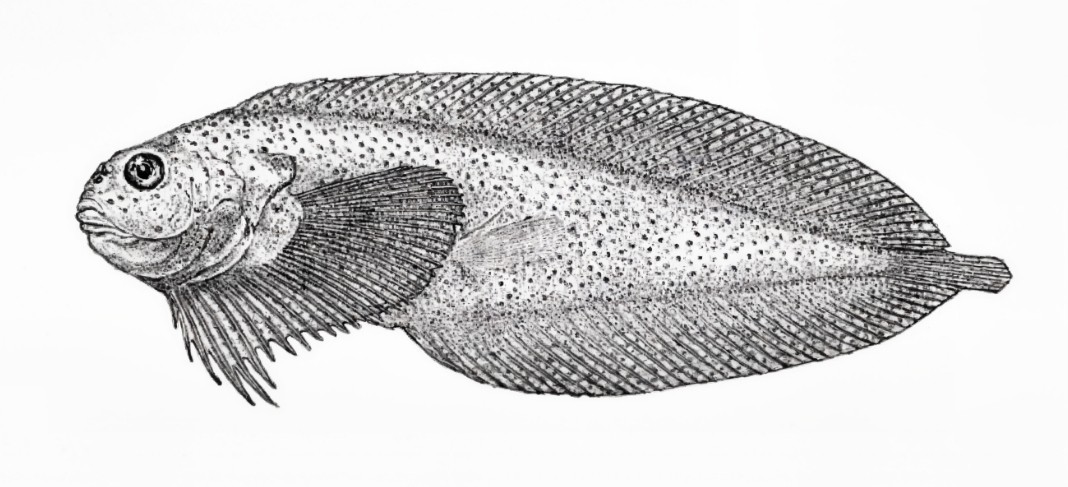
Liparis liparis
The body of the common seasnail is elongated, compressed at the sides (especially at the rear). …
Gelatinous seasnail
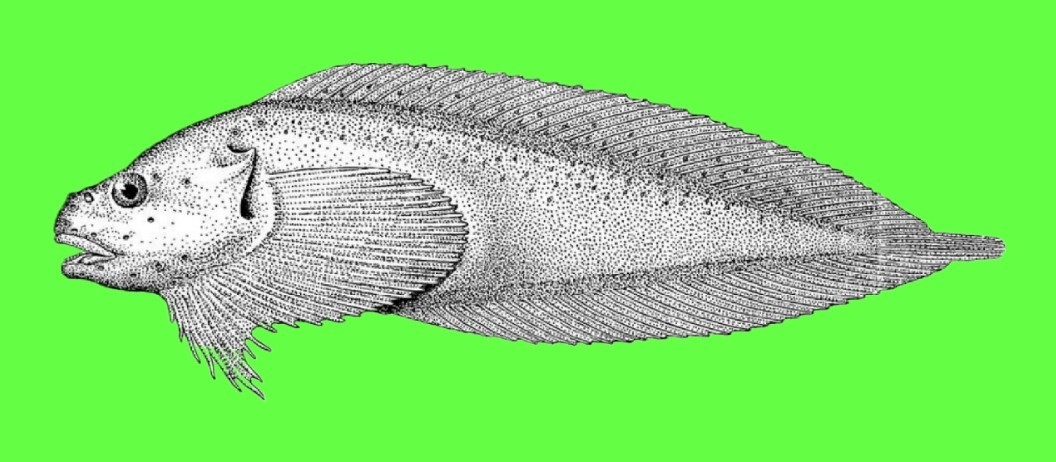
Liparis fabricii
The body shape of the Gelatinous seasnail resembles a tadpole with a large rounded head and …
Kelp snailfish
Liparis tunicatus
The Kelp Snailfish has a broad, rounded head that is slightly compressed from the sides. It …