 Allfishes
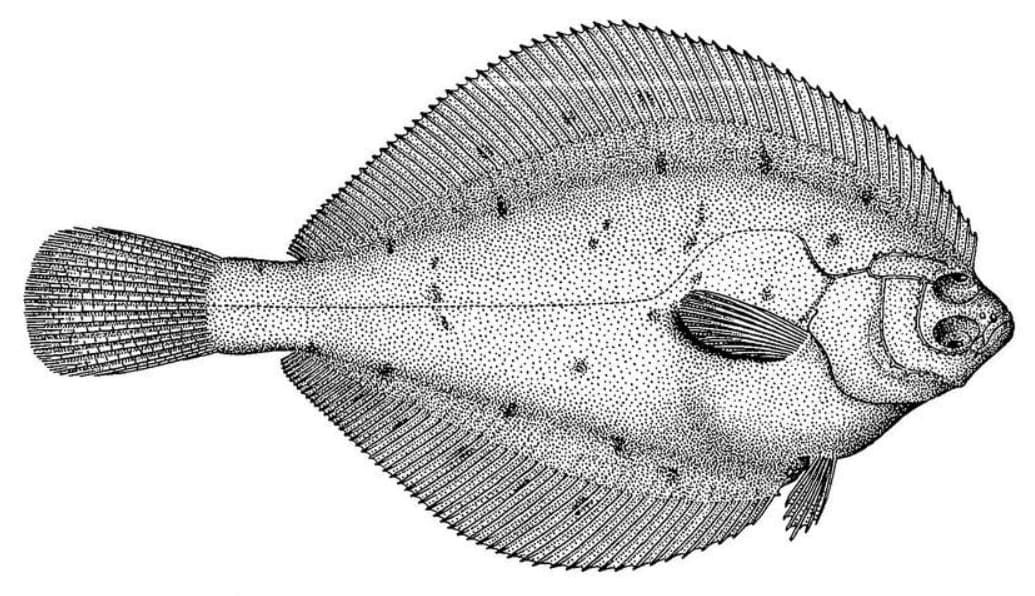
Yellowfin sole (Limanda aspera)
Limanda asprella Hubbs, Pleuronectes asper Pallas.
Latin name
Limanda aspera
Other names
Limanda asprella Hubbs, Pleuronectes asper Pallas.
Identification
Body large and broad, mouth small. The lateral line is strongly curved above the pectoral fins. The snout is very short, its length not exceeding the diameter of the eye. The lateral line has 80-89 scales.
Fish colouring
A narrow black stripe runs along the dorsal and anal fins on the eye side. Blind side white, dorsal and anal fins yellow from underneath with bluish-grey margin and white ray tips.
Distribution
Widespread, inhabiting the seas of the North Pacific, penetrating along the Asian coast to Busan, along the American coast to Vancouver Island, entering the Chukchi Sea in the north.
Habitat
Leads a benthic lifestyle. It stays close to the shore at a depth of 15-80 metres, mainly over sandy substrates. In winter it moves away from the coast to deeper depths, staying mainly at 250-400 metres.
Size
A large flounder that can reach a length of 49 cm and a weight of 1.7 kg.
Behavior
It winters at depths of 150-250m, but in April, after the longhead, it comes to the coast to spawn, where it remains until September.
Food and feeding habits
Their diet is based on crustaceans, molluscs, worms and small fish.
Reproduction
Spawning takes place near the coast in shallow water. It usually peaks in mid-summer. Fecundity is relatively high.
Fishing
It is a valuable commercial species with an excellent flavour.
Related species (same family)
Alaska plaice
Pleuronectes quadrituberculatus
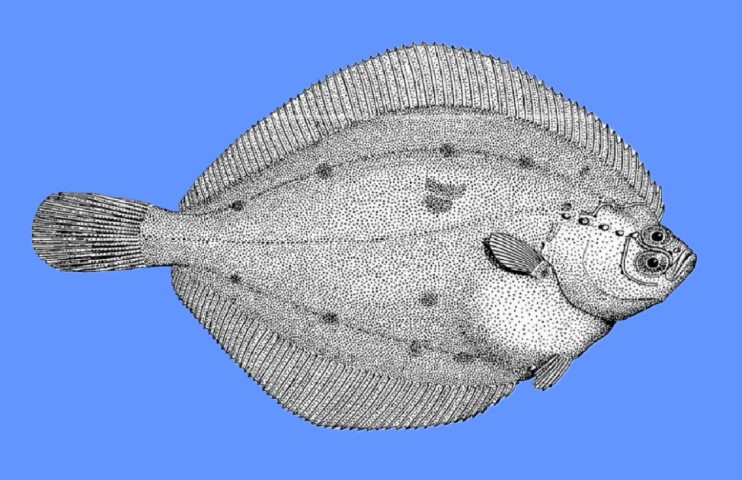
The ocellar bony ridge of the Alaska plaice is divided into 4-8 bony tubercles and forms …
American plaice
Hippoglossoides platessoides
It has a slender body and a large mouth. The ocular side is covered with ctenoid …
Arctic flounder
Liopsetta glacialis
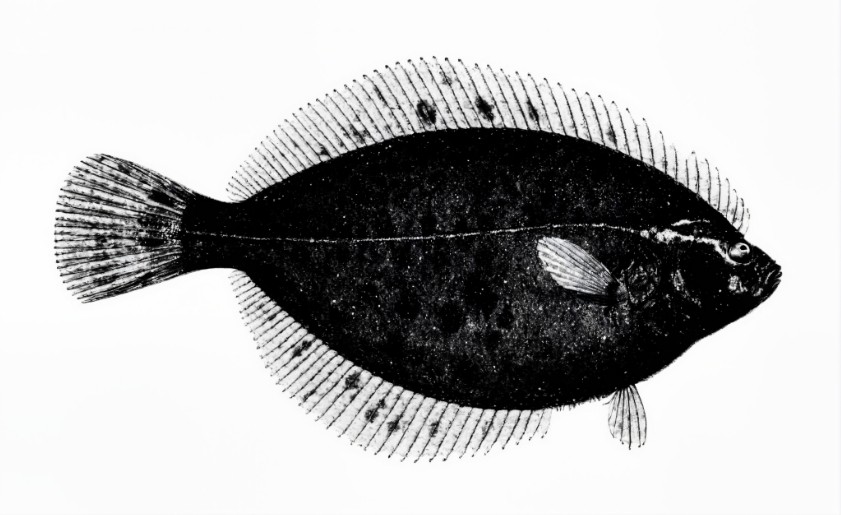
It is a right eyed flounder. It is characterized by the presence of both eyes on …
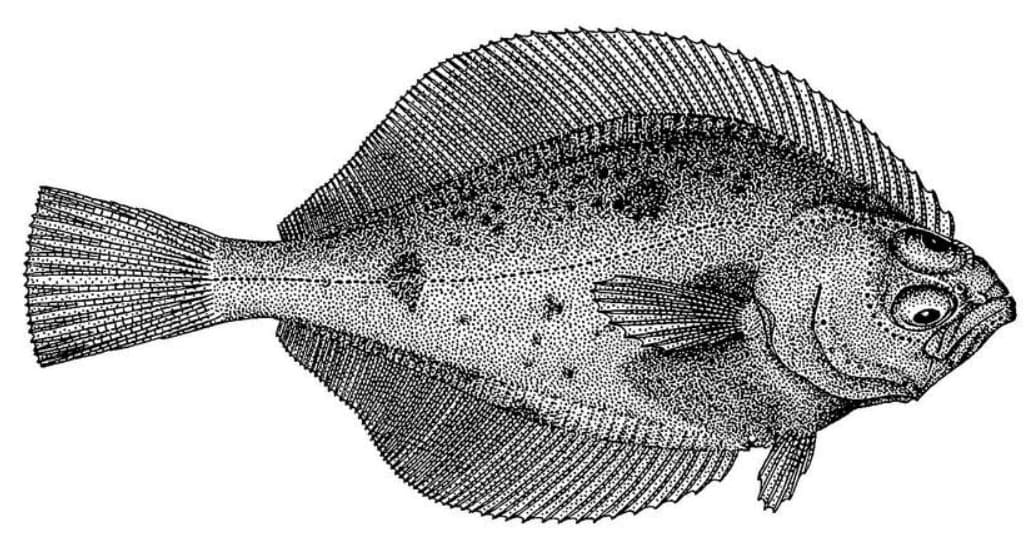
Bering flounder
Hippoglossoides robustus
The mouth is large. The teeth on each jaw are arranged in a single row. The …
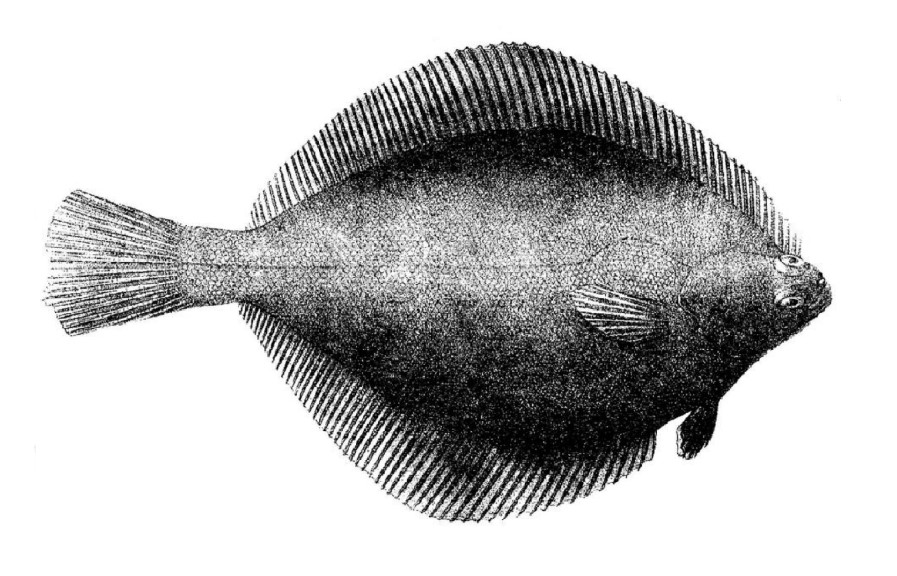
Common dab
Limanda limanda
A distinctive feature of the common dab is the lateral line with a curve above the …
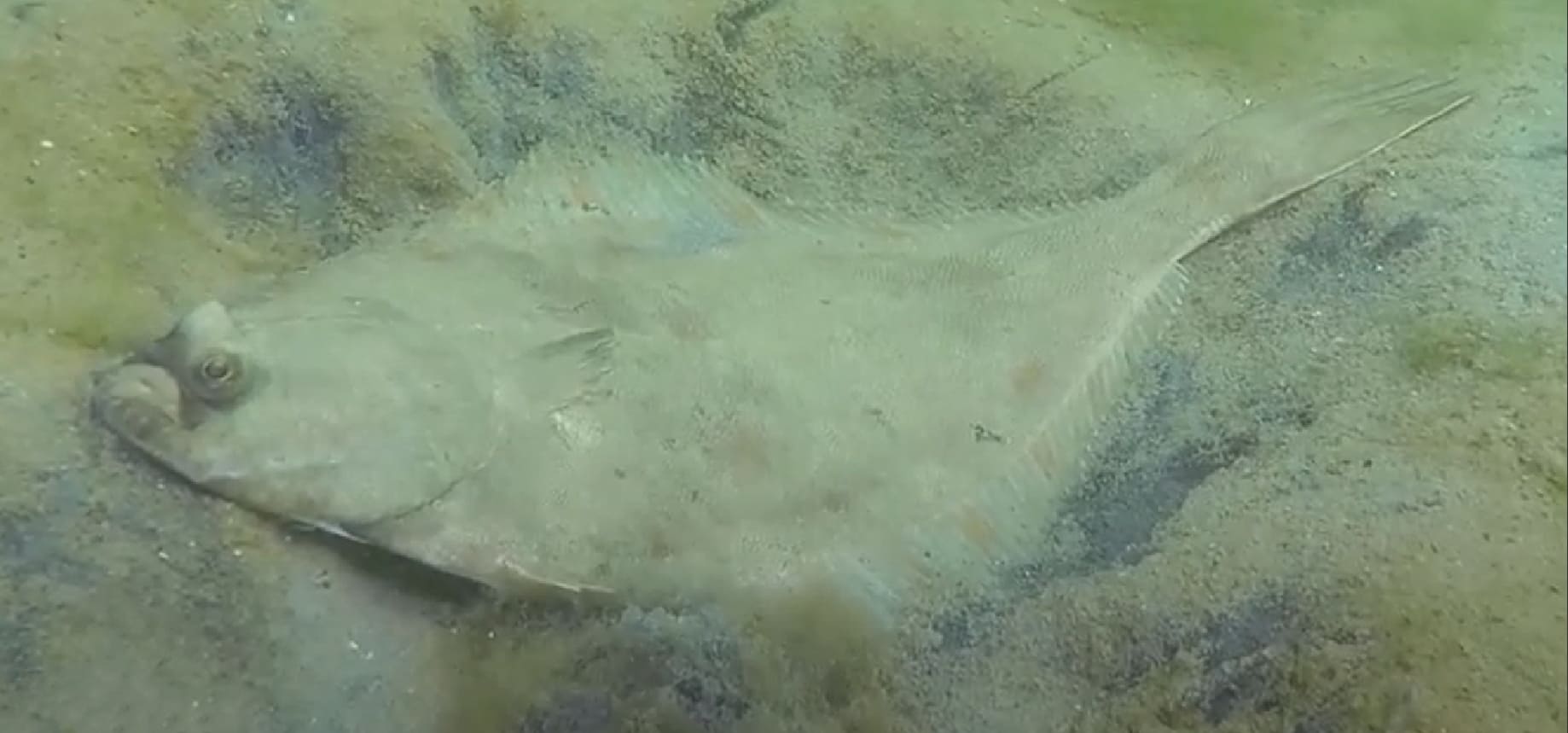
European Flounder
Platichthys flesus
The body is flattened. Both eyes are on the same upper side of the body. In …