 Allfishes
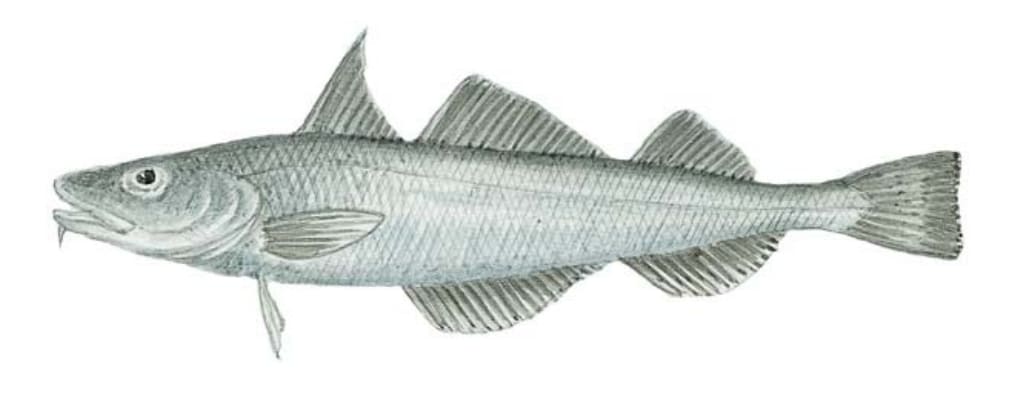
Tomcod, Pacific (Microgadus proximus)
Tomcod, piciata, California tomcod.
Latin name
Microgadus proximus
Other names
Tomcod, piciata, California tomcod.
Identification
The body of the Pacific tomcod is elongated and slender. It has a small abdomen on its chin. Characteristic of the cod family, it has three dorsal fins, two anal fins, a large head, and a large mouth with small teeth. The body is covered with fine, thin scales. Its coloration is olive green above and creamy white below, and its fins have dusky tips. Three spineless dorsal fins and a small chin barb distinguish Pacific cod from all similar fish except its cousin, Pacific cod. It has a chin fin length equal to the diameter of the eye, whereas Pacific tomcod has one less than half the diameter of the eye.
Distribution
This species is found from central California, near Point Sal, to Unalaska Island, Alaska.
Habitat
Dwelling in depths ranging from 60 to 720 feet, the Pacific tomcod prefers shallower waters and areas with sandy bottoms.
Size
The Pacific tomcod can be up to 1 foot long.
Life history and Behavior
No information
Food and feeding habits
The Pacific tomcod mainly feeds on anchovies, shrimp, and worms.
Reproduction
No information
Related species (same family)
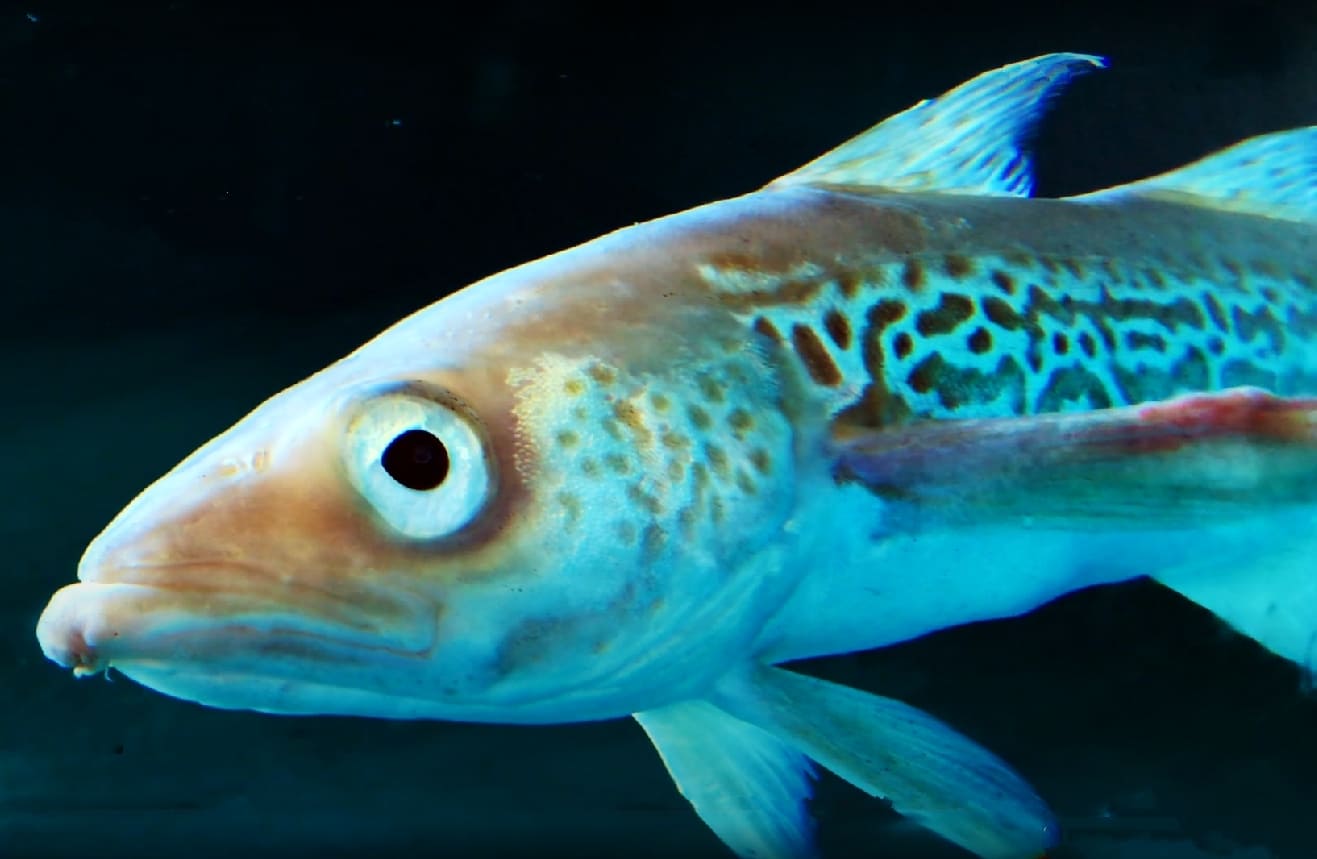
Alaska pollock
Gadus chalcogrammus
Alaska pollack have very large eyes and a very short tendril under the lower lip. The …
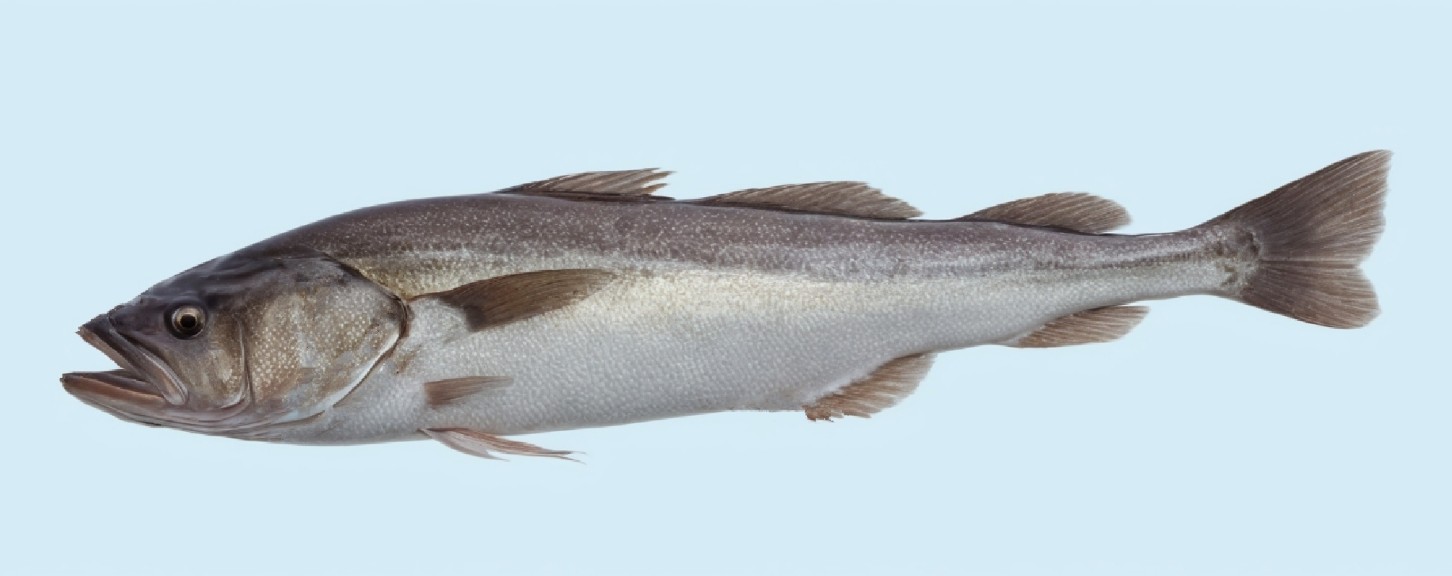
Arctic cod
Arctogadus glacialis
Arctic cod are characterized by a thin body, a deeply bifurcated tail, a protruding mouth, large …
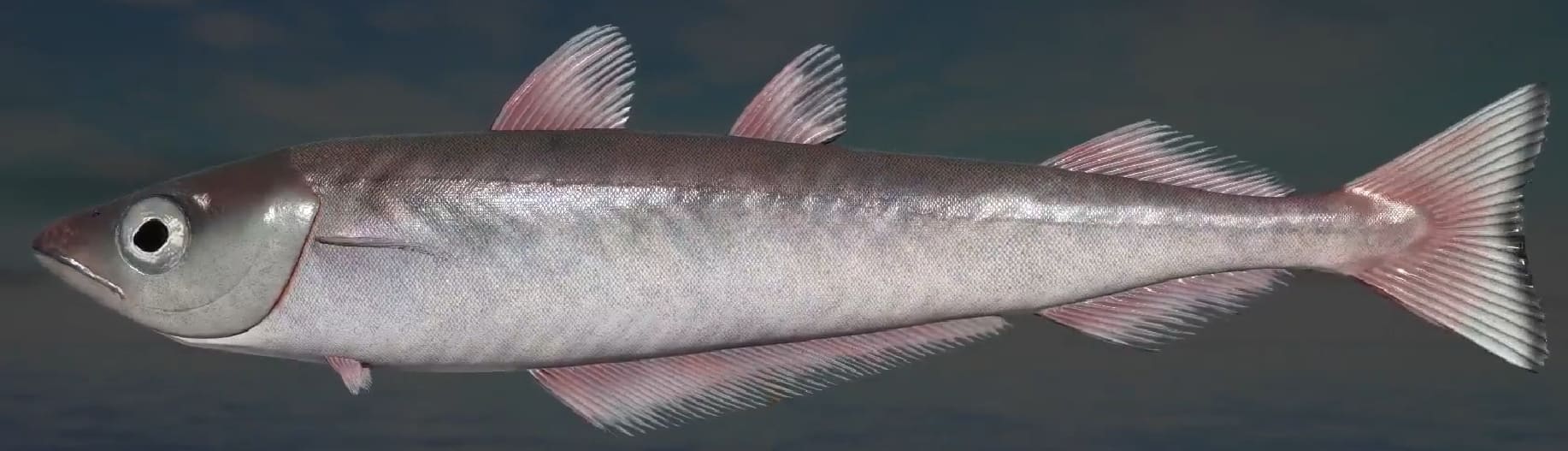
Blue whiting
Micromesistius poutassou
The body is elongated and covered with very small, slightly falling cycloid scales. There is no …
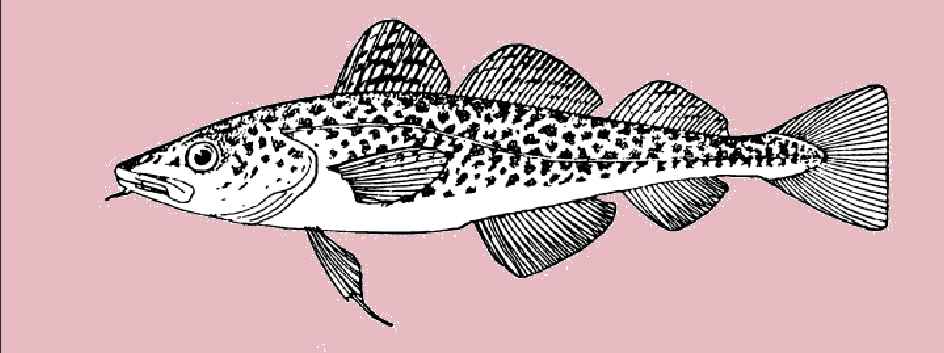
Cod, Atlantic
Gadus morhua
The Atlantic cod has three dark dorsal fins and two dark anal fins, none of which …
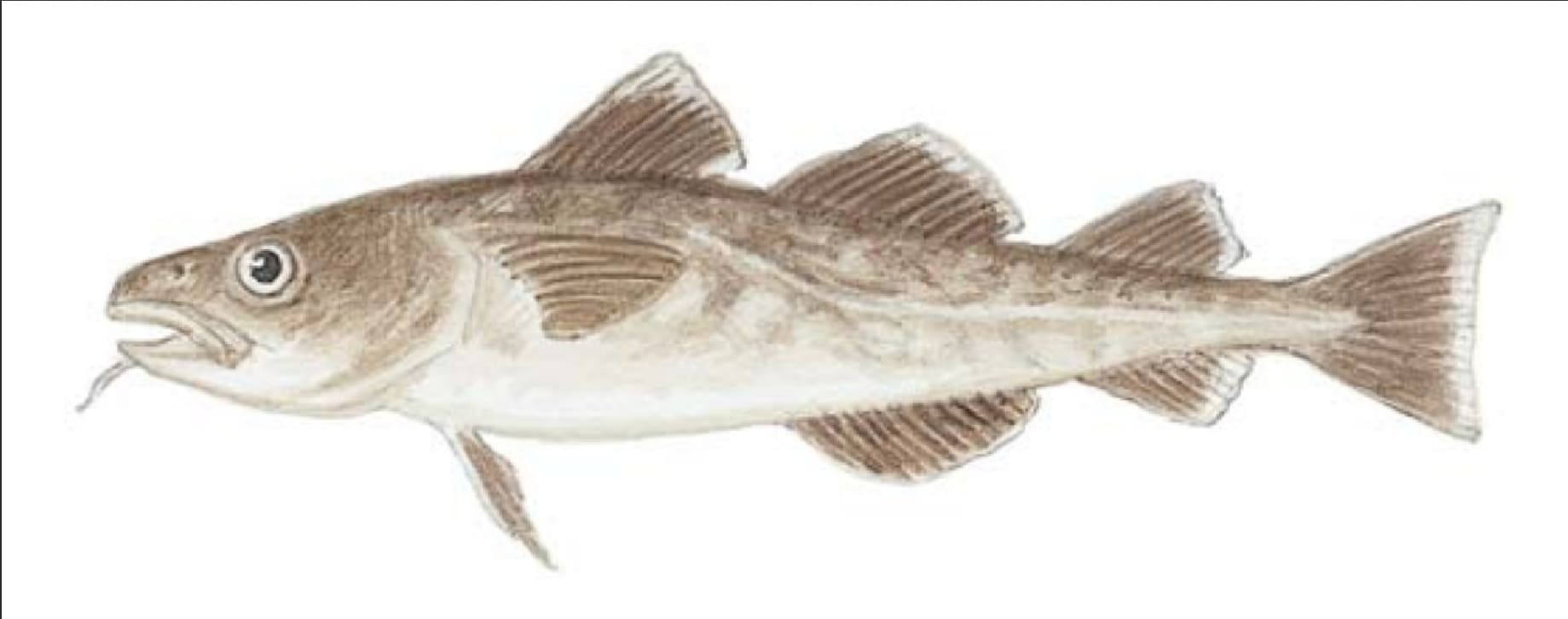
Cod, Pacific
The Pacific cod, characteristic of the cod family, has three distinct dorsal fins, two anal fins, …
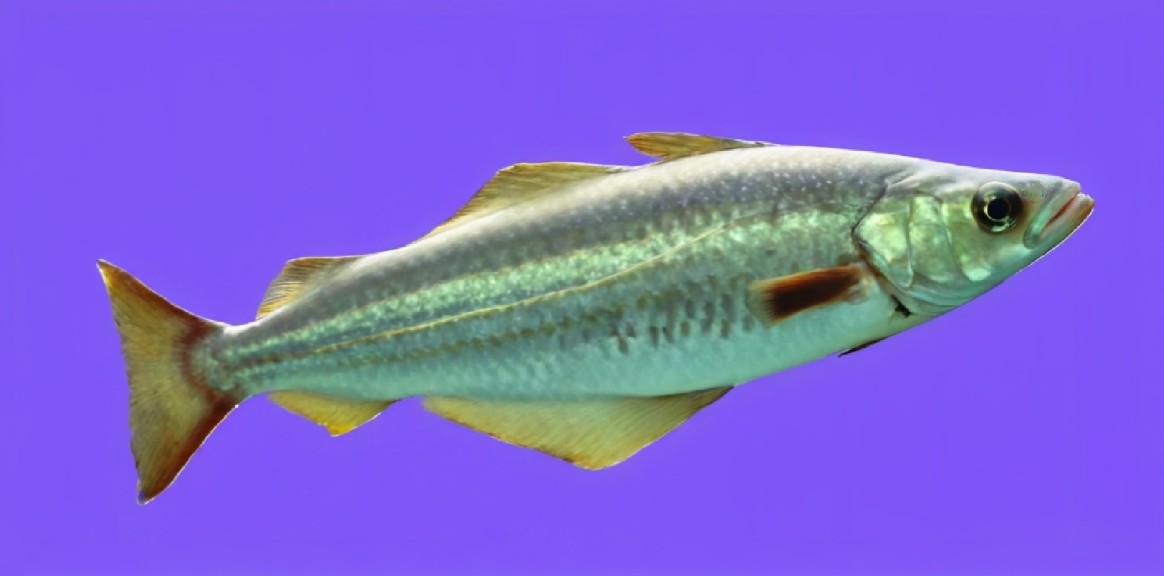
European pollock
Pollachius pollachius
The European pollock is similar to the pollock. However, unlike its relative, the European pollock's lateral …