 Allfishes
Snapper, Pacific Cubera (Lutjanus novemfasciatus)
Dog snapper, Pacific dog snapper; Spanish: boca fuerte, huachinango, panza prieta, pargo jilguero, pargo moreno, pargo negro.
Latin name
Lutjanus novemfasciatus
Other names
Dog snapper, Pacific dog snapper; Spanish: boca fuerte, huachinango, panza prieta, pargo jilguero, pargo moreno, pargo negro.
Identification
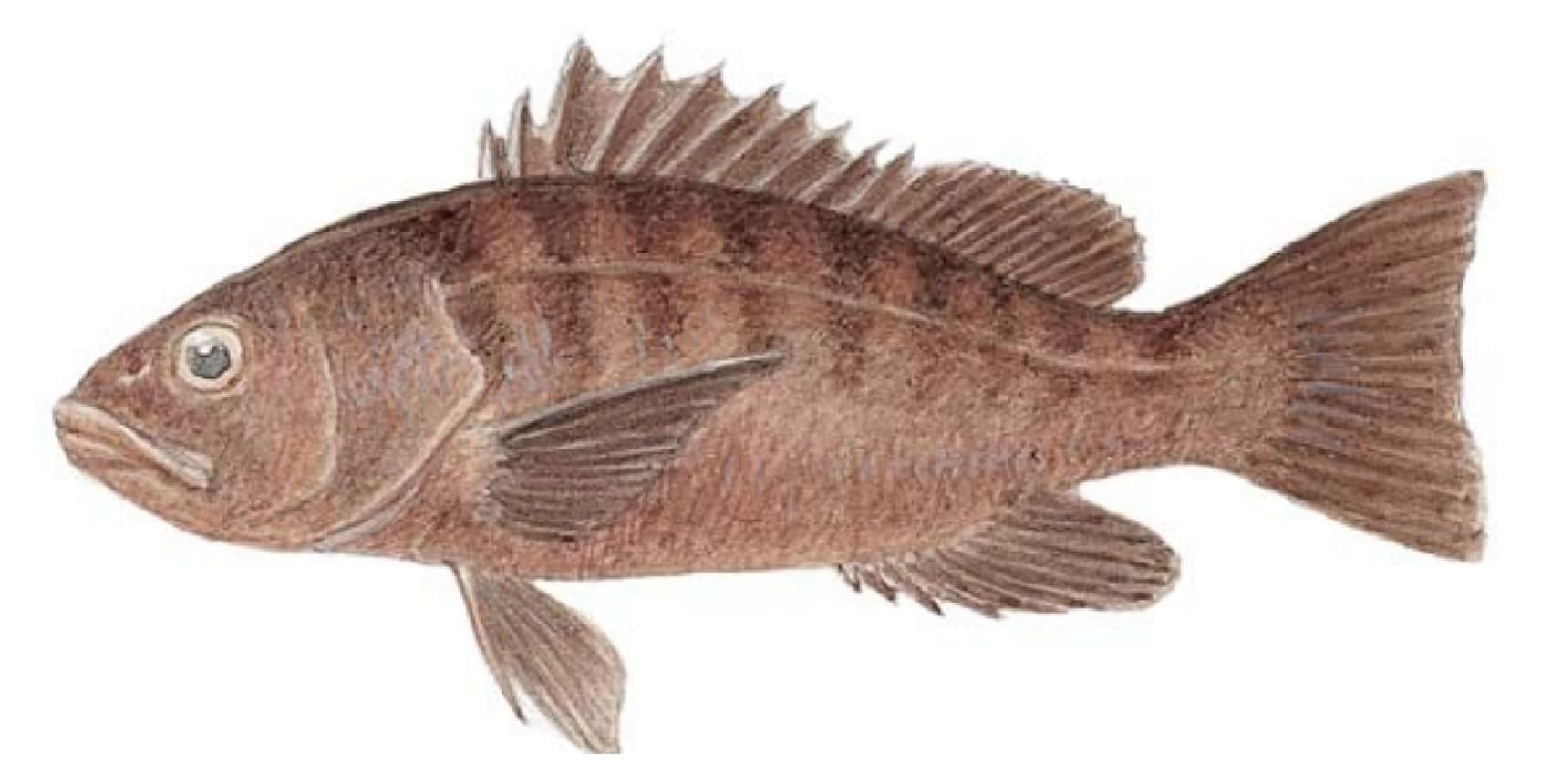
Juveniles are purplish-brown with a light spot in the center of each scale, while adults and older fish are almost dark red. Occasionally, a blue stripe can be seen under each eye, and there are about nine dashed stripes on the flanks. The tail is slightly forked or moon-shaped (crescent-shaped), the dorsal fin has 10 spines and 14 soft rays, and the anal fin is rounded and has 3 spines and 8 rays. The pectoral fins do not reach the anal fin or even the abdomen in adults. The most characteristic feature is the presence of four unusually large canines, two in the upper jaw and two in the lower jaw, which are slightly larger than the eye pupil. There is a sickle-shaped tooth fossa on the roof of the mouth.
Distribution
It lives in the eastern Pacific Ocean from northern Mexico to northern Peru.
Habitat
A coastal species that prefers rocky and coral reefs and caves in shallow water with depths to 100 feet and possibly deeper. Young fish are found in estuaries near mangroves and in estuaries.Size
Size
The largest of the nine species of snapper found in its range, reaching a weight of at least 80 pounds. The world record in tackle is considered to be a 78-pound, 12-ounce fish caught off the coast of Costa Rica.
Life history and Behavior
No information
Food and feeding habits
A carnivore, it hunts large invertebrates such as crabs and shrimp at night, as well as fish.
Reproduction
No information
Photos
Related species (same family)
Bigeye snapper
Lutjanus lutjanus
They have a spindle-shaped. They have a slightly sloping forehead. The front teeth are triangular, and …
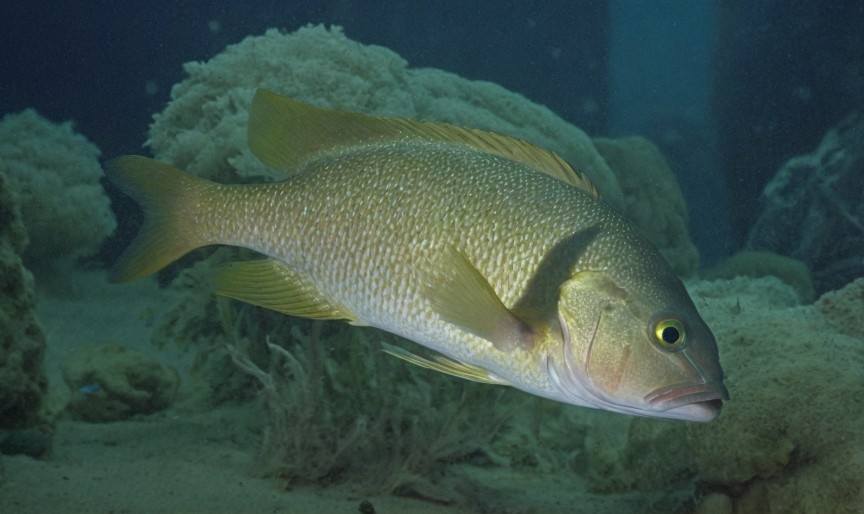
Blubberlip snapper
Lutjanus rivulatus
The Blubberlip Snapper has a very deep body, with a standard length of just over twice …
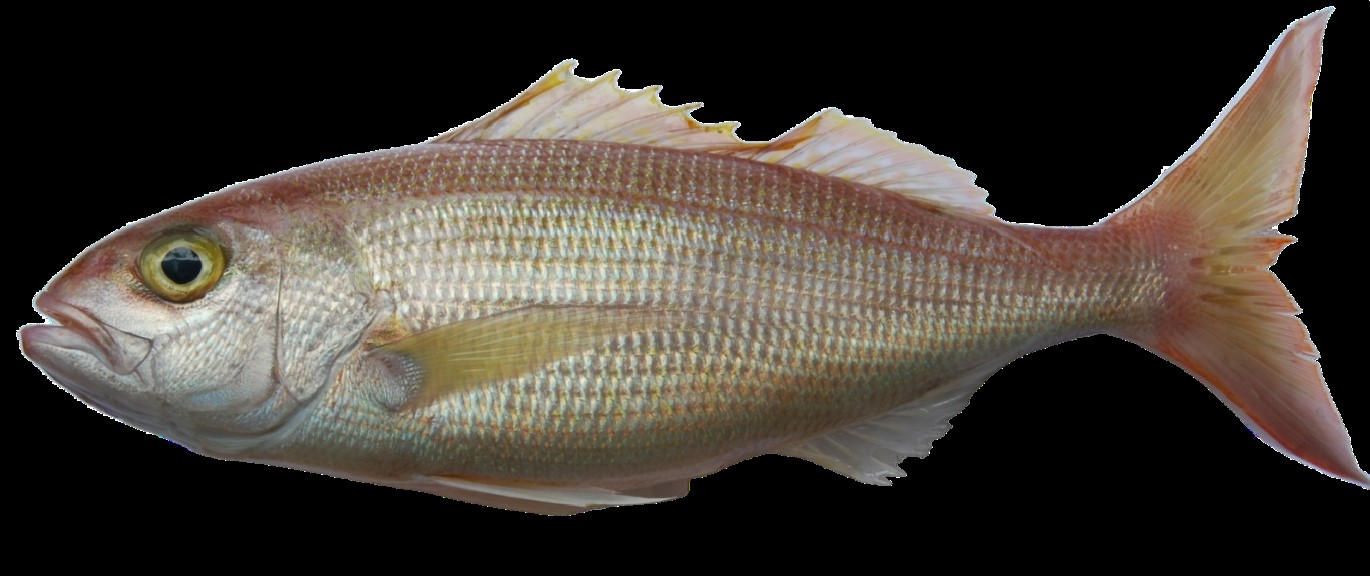
Crimson jobfish
Pristipomoides filamentosus
The body is elongated, somewhat compressed at the sides, relatively low; the body height at the …
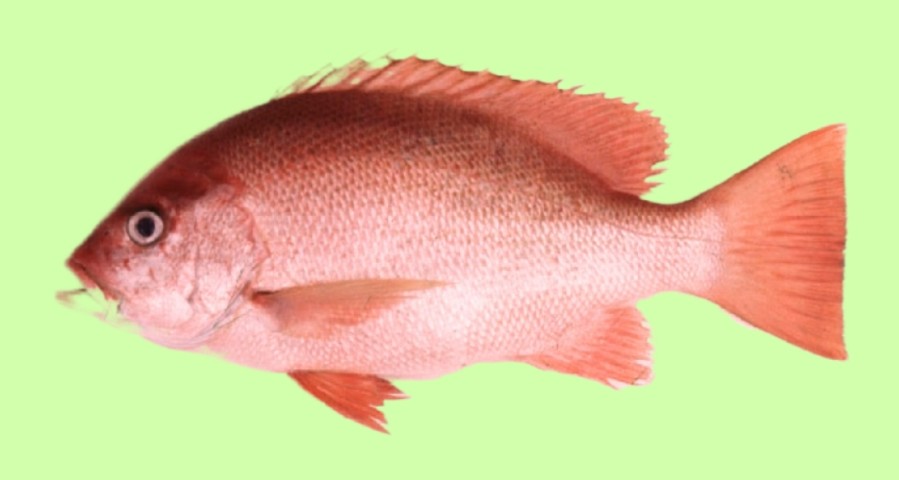
Crimson snapper
Lutjanus erythropterus
The body of the Crimson Snapper is spindle-shaped, moderately large and 2.5-3.0 times the standard body …
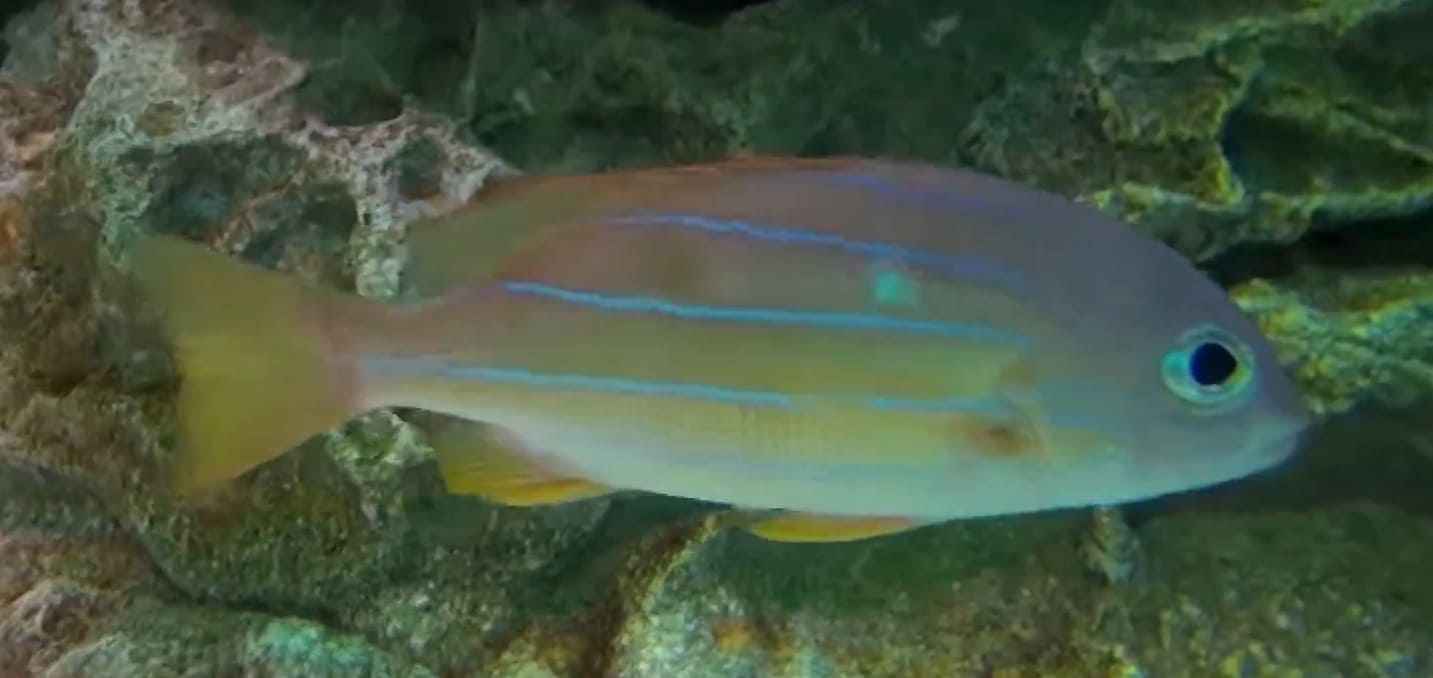
Five-lined snapper
Lutjanus quinquelineatus
This fish has a moderately deep body, with a standard length of 2.3-2.9 times its depth. …
Mangrove red snapper
Lutjanus argentimaculatus
The body of the Mangrove Red Snapper is spindle-shaped, moderately large. The snout is slightly pointed. …