 Allfishes
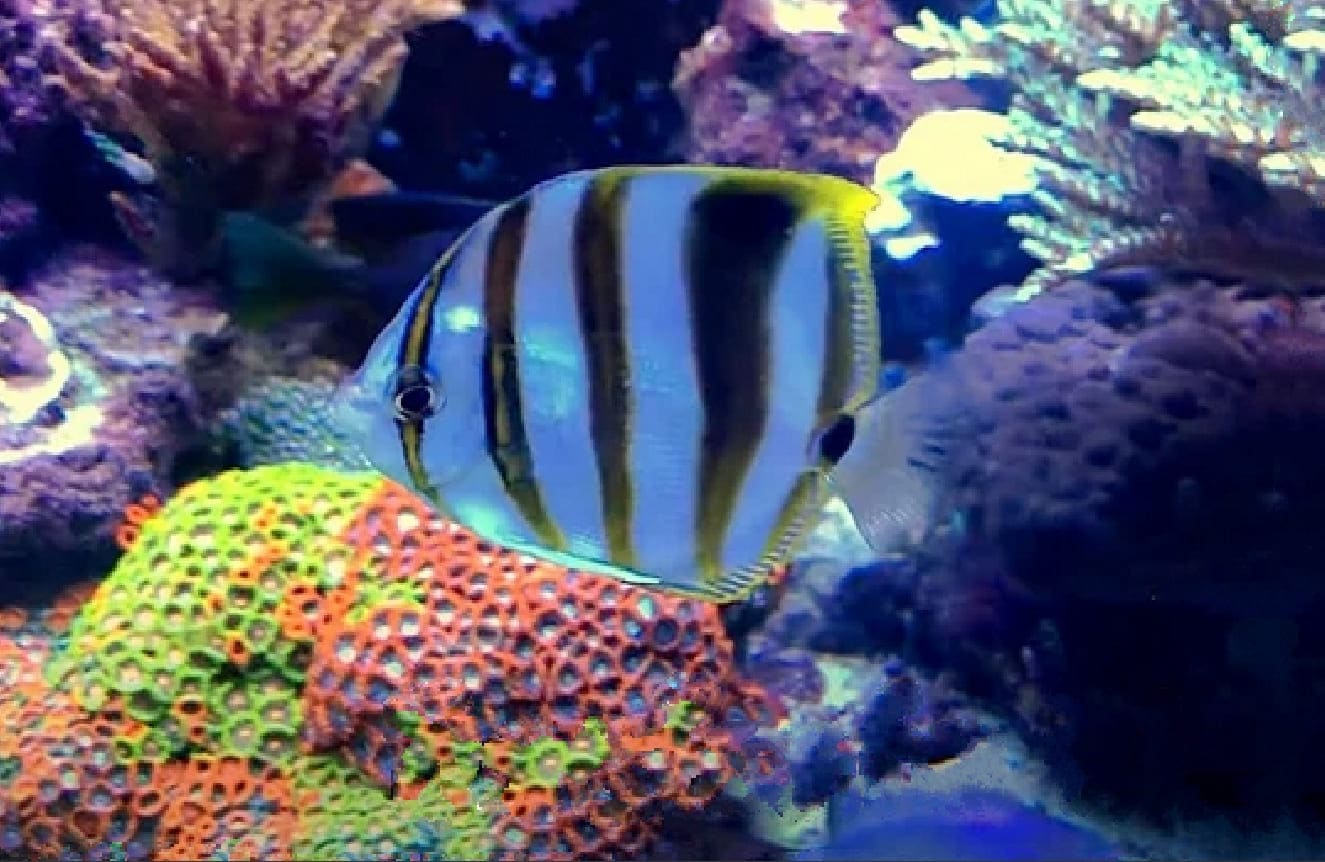
Sixspine butterflyfish (Parachaetodon ocellatus)
Latin name
Parachaetodon ocellatus
Other name
Parachaetodon ocellatus
Identification
Six-spined butterflyfish have deep, narrow bodies from the sides. They have continuous dorsal and caudal fins that are never bifurcated.
Features of fish fins
Dorsal spines (total): 6 - 7; Dorsal soft rays (total): 28 - 30; Anal spines: 3; Anal soft rays: 18 - 20.
Fish colouring
The six-spined butterflyfish has a triangular dorsal fin that is predominantly yellow. The body is white with five brown or orange stripes. The first of these runs across the eye and is orange with a black border. The stripe that begins below the centre of the dorsal fin has a dark spot at the base of the fin. There is another black oval mark with a silver leading edge on the tail peduncle. A paler stripe runs along the edge of the dorsal and anal fins.
Distribution
Widespread in the Indo-Pacific region: Ogasawara Island (Bonin) to Australia, also from Malaysia.
Habitat
Marine tropical species associated with reefs. Depths from 5 to 40 metres.
Size
The maximum length of this species is 18 cm.
Behavior
They occur in pairs on shallow sandy or muddy bottoms of inshore reefs. Adults congregate in large numbers on open muddy areas in deep water. Juveniles sometimes appear in large lagoons overgrown with algae at depths of about 5 m or more.
Food and feeding habits
Their diet consists of small benthic invertebrates and possibly some sponges.
Reproduction
Laying eggs, forming pairs during reproduction.
Fishing
Sixspine butterflyfish are not commercially important in the fishery.
Relationship with a person
Harmless.
Related species (same family)
Asian butterflyfish
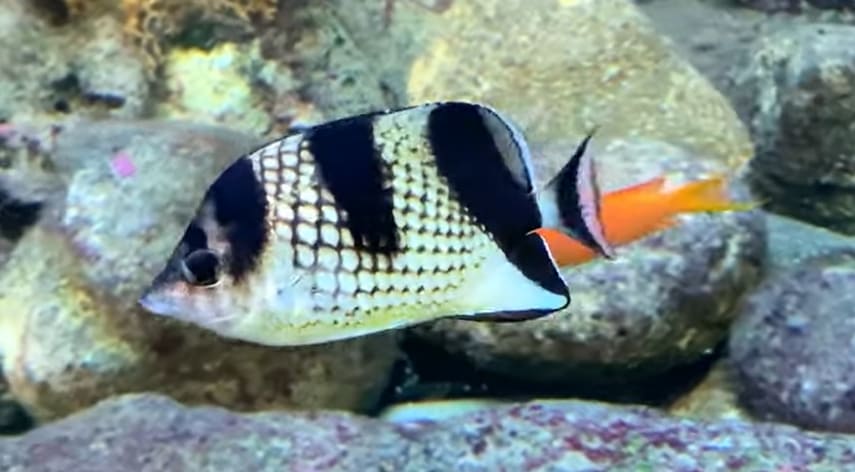
Chaetodon argentatus
The Asian butterflyfish is a fish with a large body compressed at the sides, a small …
Brown-banded butterflyfish
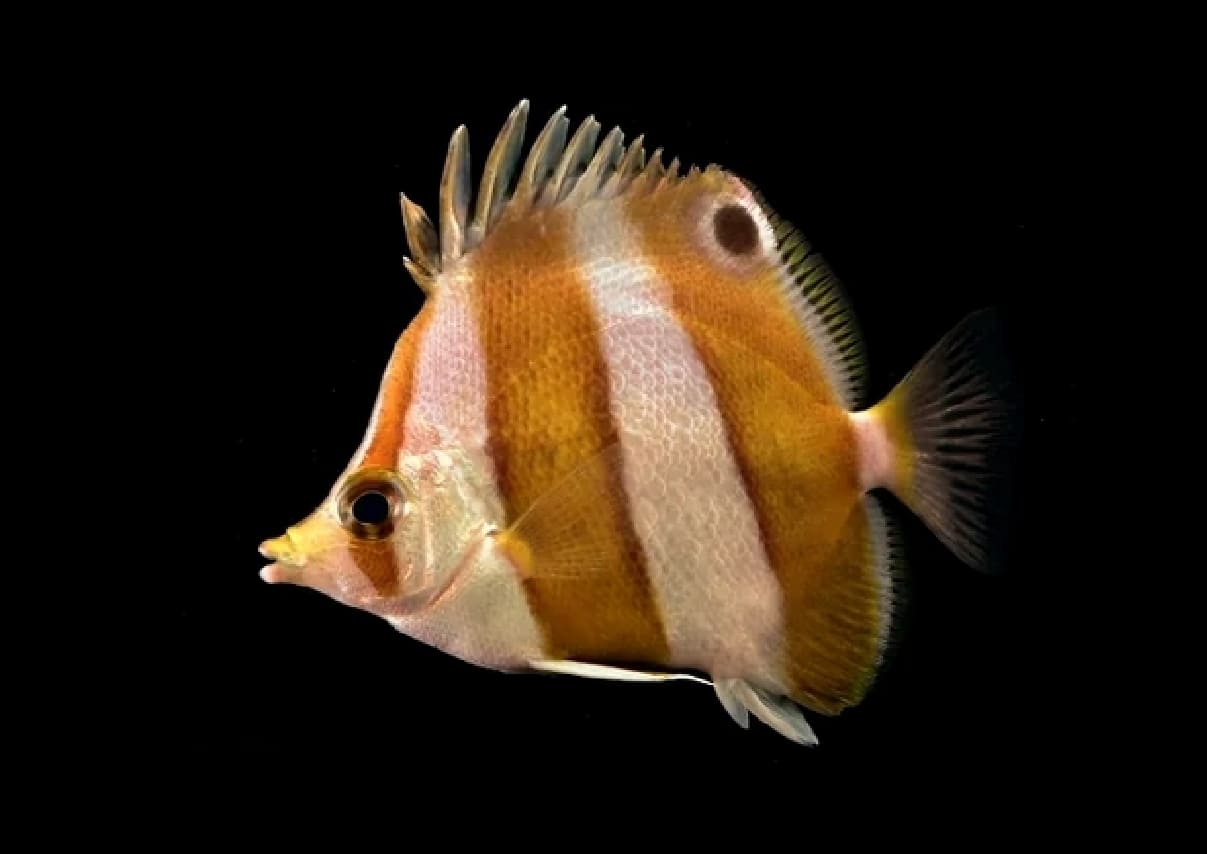
Roa modesta
The body of these fishes is large, short, strongly compressed at the sides. The head is …
Chevron butterflyfish
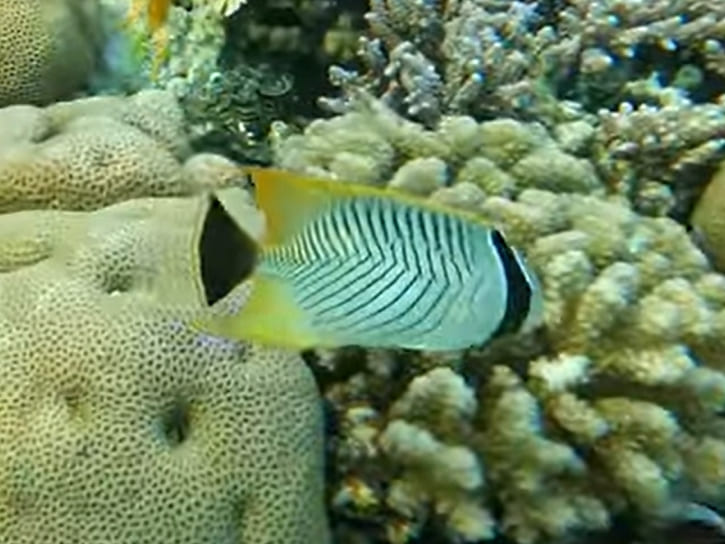
Chaetodon trifascialis
Adults have an elongated body. Because of the peculiar age-dependent coloration and the elongated silhouette, this …
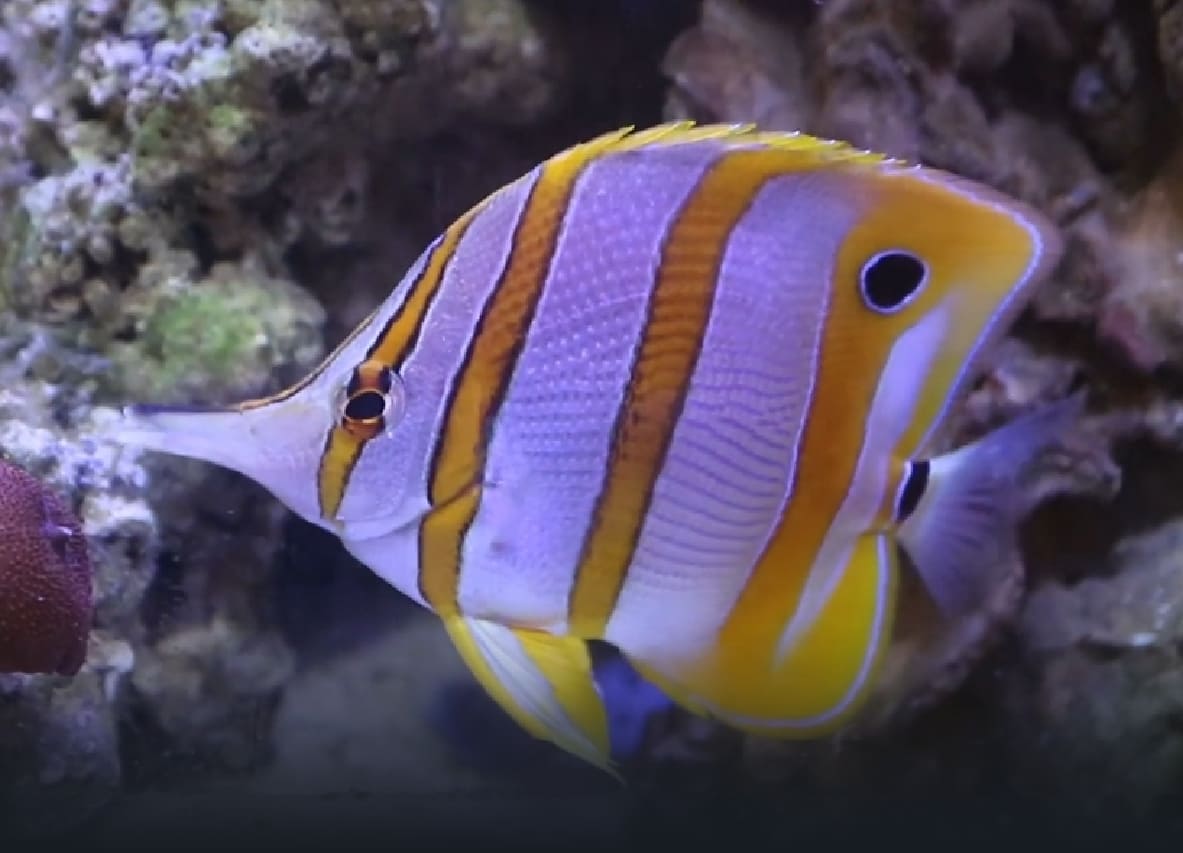
Copperband butterflyfish
Chelmon rostratus
Copper banded butterflyfish have a long snout. Juveniles look like adults.
Foureye butterflyfish
Chaetodon capistratus
The foureye butterflyfish has a body that is compressed laterally. The upper part of the head …
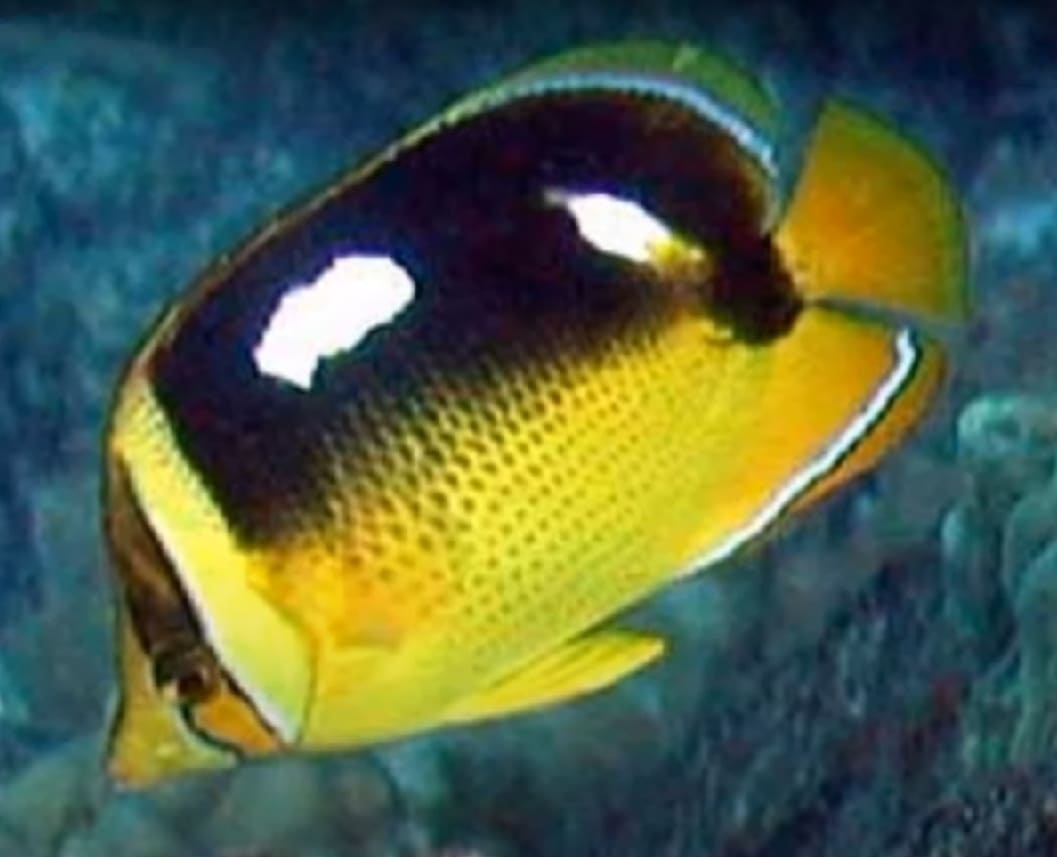
Fourspot butterflyfish
Chaetodon quadrimaculatus
Fourspot butterflyfish have very fine, hair-like teeth that allow them to target small organisms inaccessible to …