 Allfishes
Silversides (Leuresthes tenuis)
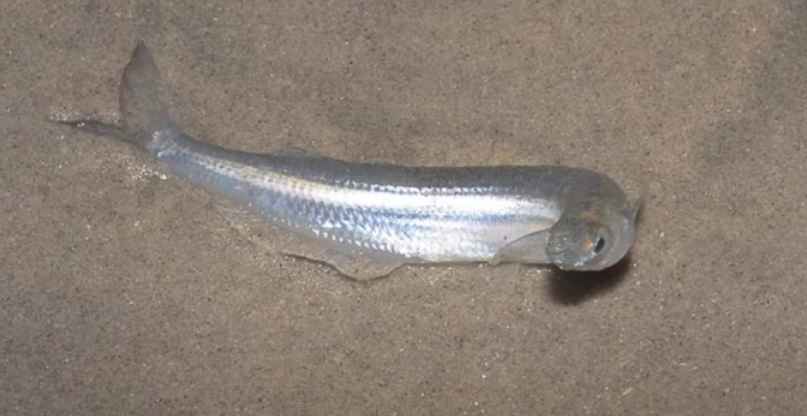
California Grunion
Latin name
Leuresthes tenuis
Other names
California Grunion
Identification
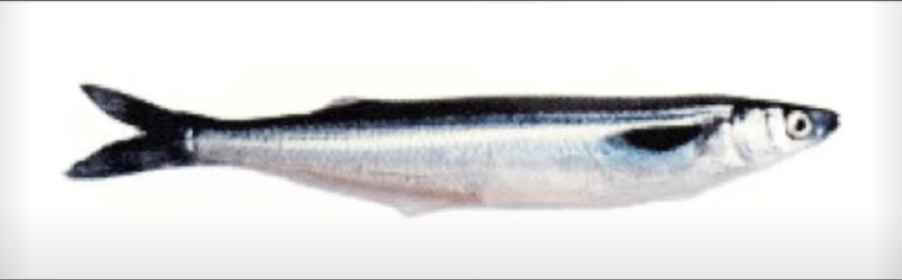
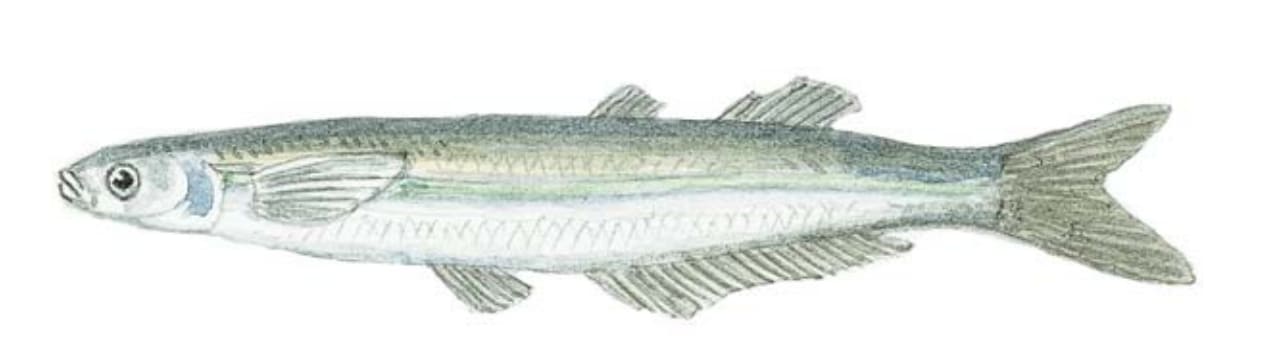
All fish lack a lateral line and have small, almost useless teeth. The pelvic fins are far behind the pectoral fins, and the small, spiny dorsal fin is well separated from the soft dorsal fin. The body is usually elongated. The jacksmelt (Atherinopsis californiensis) has small, uncovered teeth arranged in bands. This feature distinguishes it from California grunion, as well as from topsmelt (Atherinops affinis). Topsmelt is easier to distinguish from jacksmelt by forked teeth, arranged in one row, but not in strips.
Distribution
Along the Atlantic coast, the tidewater silverside (Menidia beryllina) is found from Massachusetts to the Gulf of Mexico. Several similar species occur in the same general range, including Atlantic silverside (M. menidia) and Mississippi silverside (M. audens). Jacksmelt (Atherinopsis californiensis) is often found along Pacific wharves. Gulf grunion (L. sardina) is found only in the Gulf of California.
Habitat
Some sylversids live in fresh water, while others are marine and are found near the shore.
Size
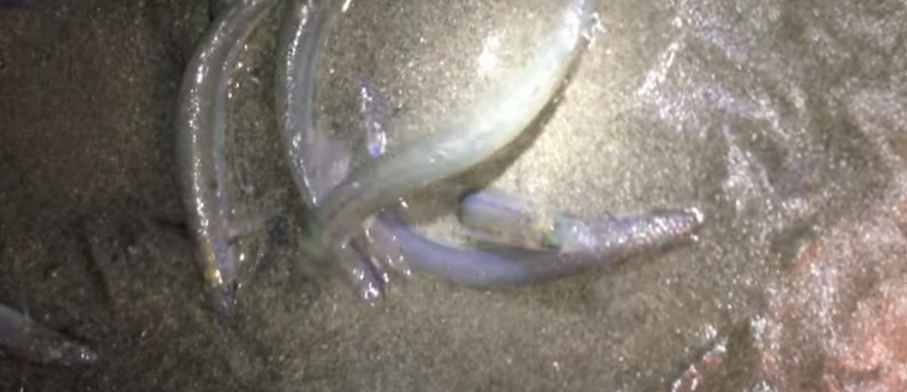
One of the most conspicuous silverfish is the California grunion, which grows to 71⁄2 inches and is known for its moonlight spawning runs and beach spawning. Topsmelt (Atherinops affinis) grows to 12 inches. Tidewater silverside (Menidia beryllina) grows to only 3 inches in length.
Life history and Behavior
No information
Food and feeding habits
No information
Reproduction
No information
Photos