 Allfishes
Roosterfish (Nematistius pectoralis)
Spanish: papagallo, gallo, pez de gallo, reje pluma.
Latin name
Nematistius pectoralis
Other names
Spanish: papagallo, gallo, pez de gallo, reje pluma.
Identification
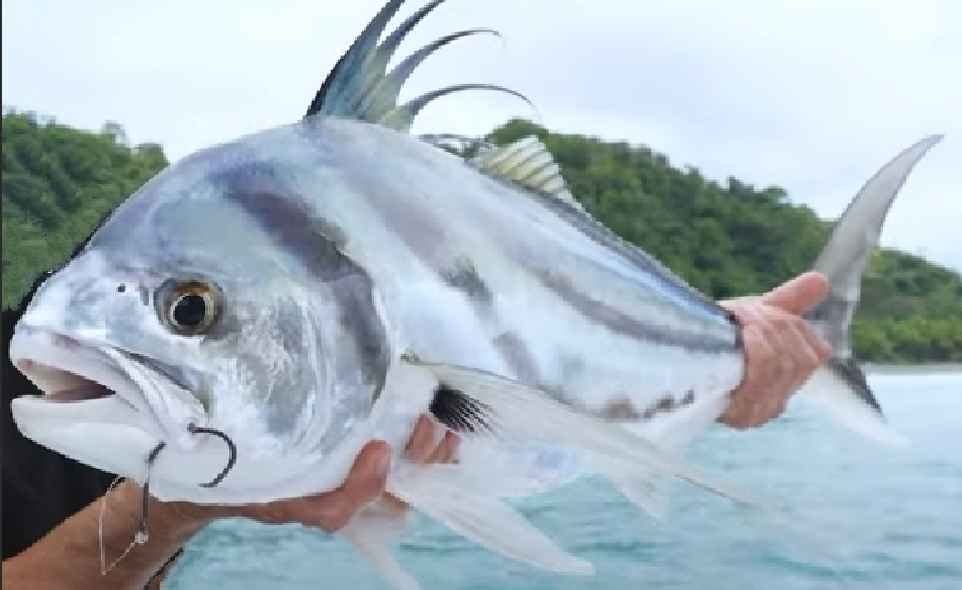
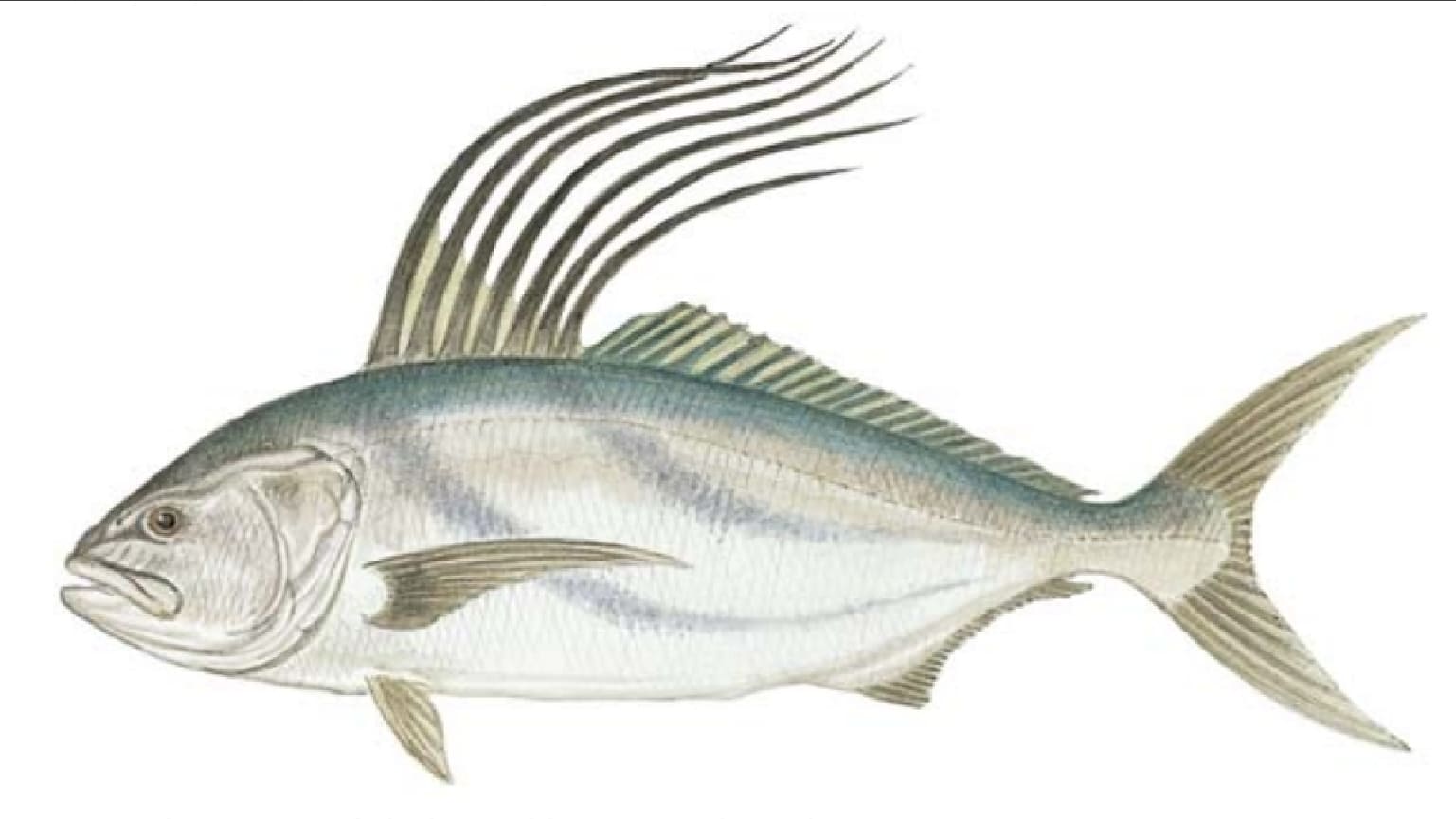
A bright, shimmering fish, it is distinguished by seven longer, thread-like dorsal fins that are found even in young fish. This crest straightens when the rooster fish is excited, such as when threatened, but usually the fin remains down in its sheath along its back. In addition, the body has two dark curved bands and a dark spot at the base of the pectoral fin.
Distribution
Endemic to the eastern Pacific, found from San Clemente in Southern California to Peru, including the Galápagos Islands. It is rare north of Baja California, Mexico.
Habitat
They live in shallow coastal areas, such as sandy shores along beaches. They can often be found near rock outcrops and rocky islands. Young fish are frequently found in tidal pools.
Size
The fish can grow up to 4 feet long and exceed 100 pounds. The world record for all tackle is held by a 114 pound fish caught off the coast of Baja California in 1960.
Life history and Behavior
No information
Food and feeding habits
It consumes a variety of small fish, and larger individuals (50 pounds or more) can even catch bonito as large as 2 pounds. When found along beaches, they may gather in flocks and feed competitively, with different members of the flock chasing bait or bait at the same time over a considerable distance.
Reproduction
No information
Photos