 Allfishes
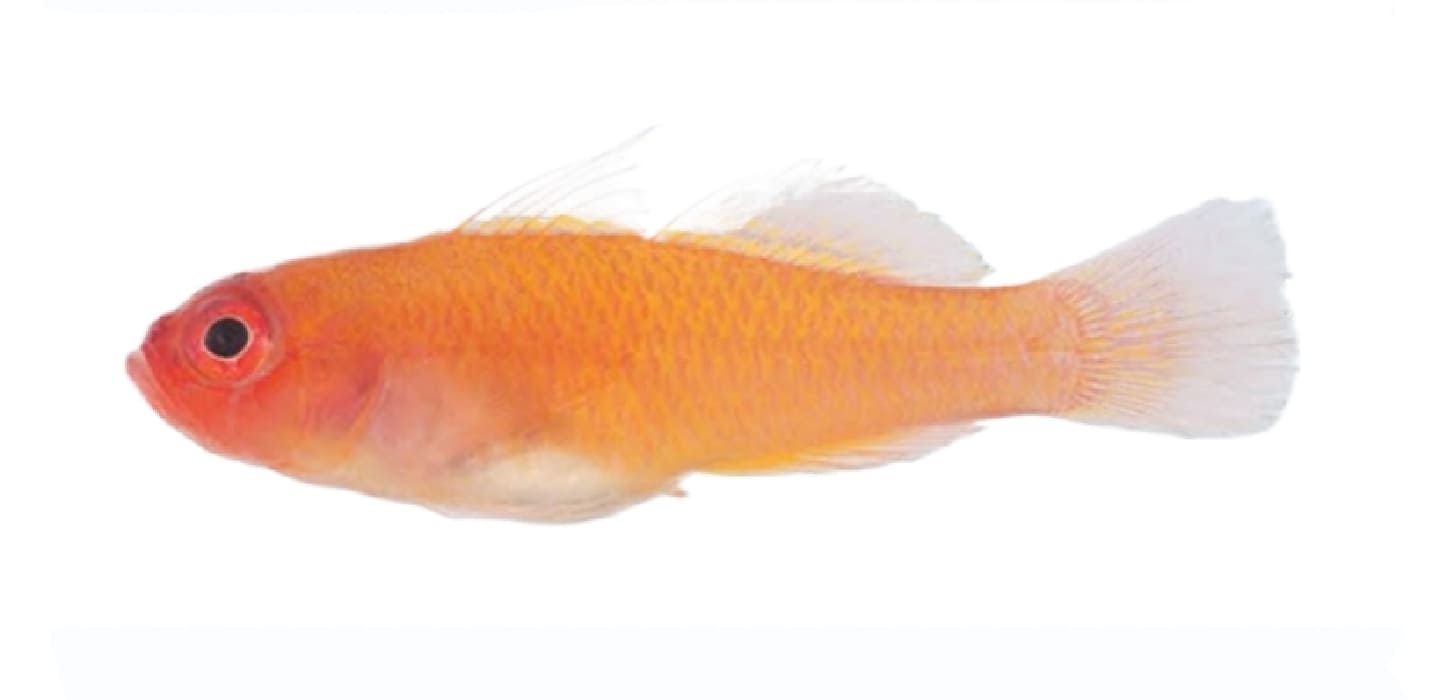
Ring-eye pygmygoby (Trimma benjamini)
Latin name
Trimma benjamini
Other name
Trimma benjamini
Identification
This species is characterized by the presence of the following features: Deep concave "U" shaped interorbital cavity; bony interorbital cavity about half the diameter of the pupil; with a small groove behind the eye; without medium sized anterorbital scales, sides of occiput covered with small scales reaching to or near the eye; cheeks and cap without scales; base of pectoral fin with medium sized oval scales; Pectoral region with 5-6 rows of cycloid scales, isthmus bare anteriorly, with one slightly enlarged scale on band between bases of pelvic fins; central 6-13 pectoral rays branched, uppermost and lowest rays unbranched; Fifth pelvic fin ray once dichotomously branched and about 60-75% of length of fourth; all other rays usually with one successive branch, basal membrane connecting two pelvic fins only at base; second dorsal spur longest, usually filiform, extending from base.
Features of fish fins
Dorsal spines (total): 7; Dorsal soft rays (total): 9 - 10; Anal spines: 1; Anal soft rays: 8 - 10.
Fish colouring
Head and trunk red in life, yellow in preservation, with a thin vertical band of gray (bluish gray in life) running from the anteroventral margin of the eye to the center of the jaws, and a second band running more or less vertically down the cheek from about the center of the eye. The orbit is bordered by a thin band of melanophores, more distinct on the dorsal side, but faded in the preserved material.
Distribution
Widespread in the western Pacific: from Sulawesi to Tonga; north to the Marshall Islands; south to New Caledonia and the Great Barrier Reef.
Habitat
A marine tropical species. Depth range 1 to 90 m, usually 4 to 35 m. Inhabits inshore and outer reef slopes.
Size
Maximum length 3 cm. Maximum reported age 0.39 years.
Behavior
They inhabit the benthos and occur singly or in loose groups.
Food and feeding habits
Ring-eyed pygmy gobies feed on plankton.
Reproduction
Larvae have a long pelagic life span of 33.9 days (= 24% of maximum life span) and linear postlarval growth. Daily mortality ranges from 2.9% to 6.3%; sex ratio 1:1.6 males/females).
Fishing
Of no commercial value or interest to fishermen.
Relationship with a person
Harmless.
Related species (same family)
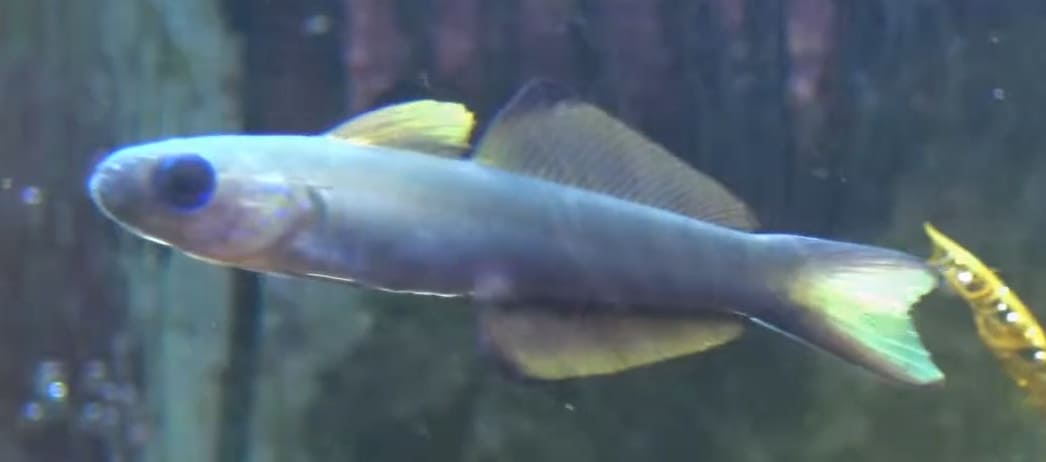
Blackfin dartfish
Ptereleotris evides
Body elongated, head small with wide mouth and rather large eyes. Vertebrae: 26. Chin with low …
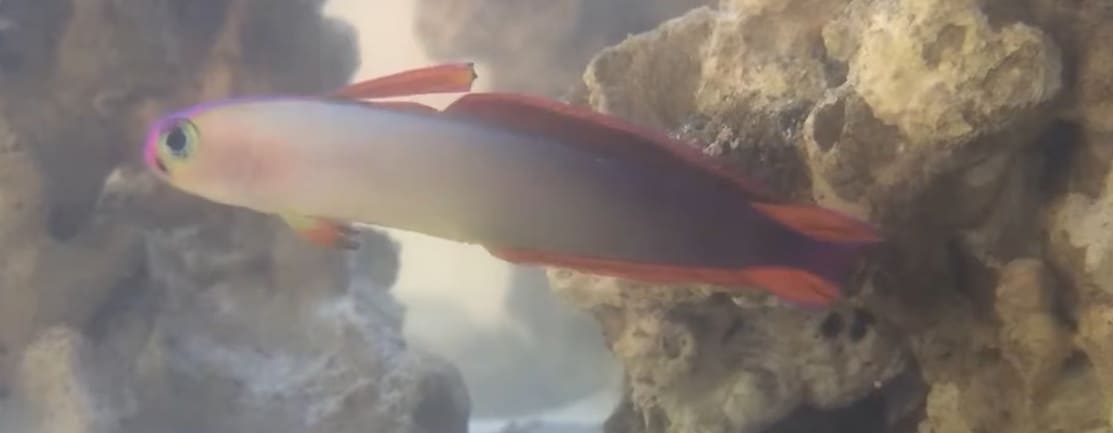
Elegant firefish
Nemateleotris decora
Slender, brightly coloured fish.
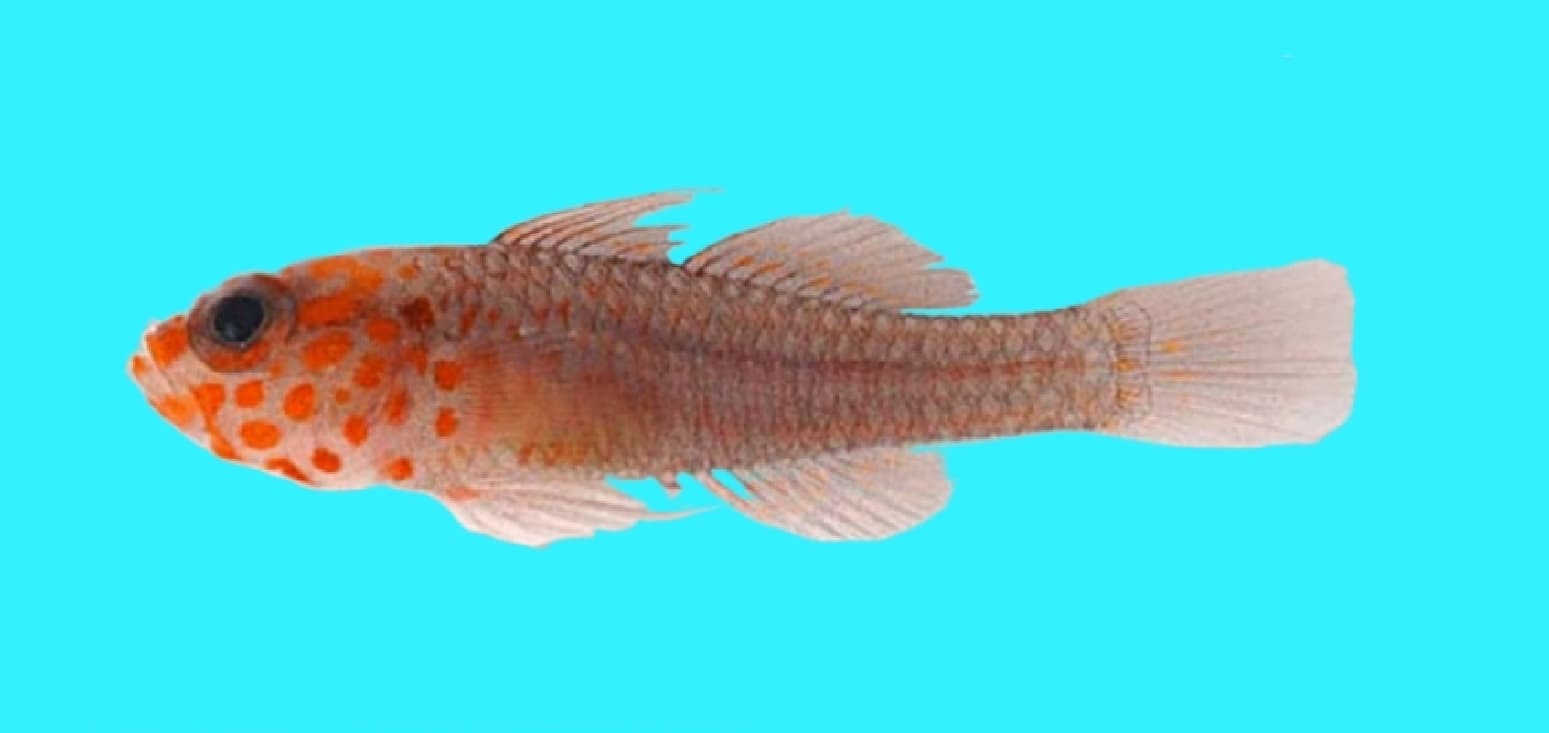
Fang's pygmygoby
Trimma fangi
Fang's pygmygoby is distinguished by a combination of the following characters: absence of predorsal scales; anterior …
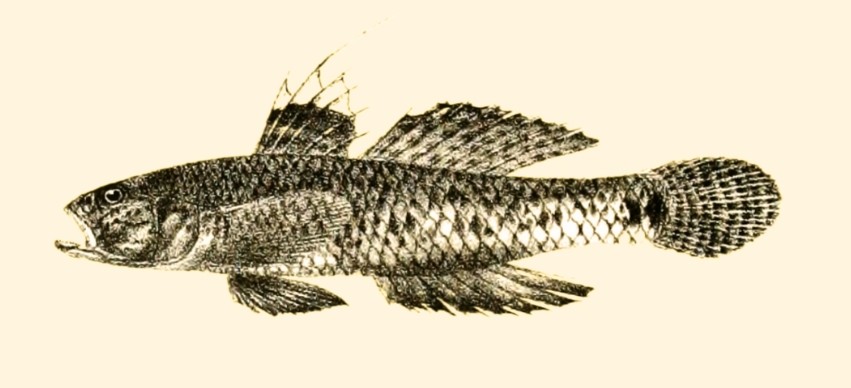
Indopacific Tropical Sand Goby
Favonigobius reichei
The body of the Indo-Pacific Tropical Sand Goby is elongated, valvate. The snout is rounded. The …
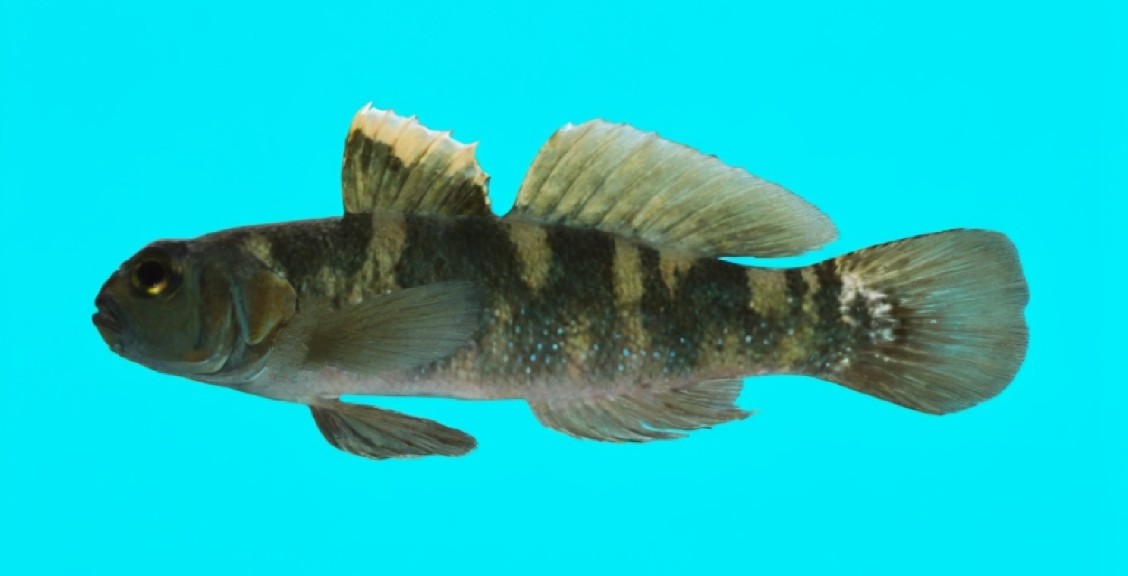
Meggitt's goby
Bathygobius meggitti
Characteristics of Meggitt's goby: body shape spindle-shaped; longitudinal row of scales 34-40; predorsal scales 14-19, reaching …
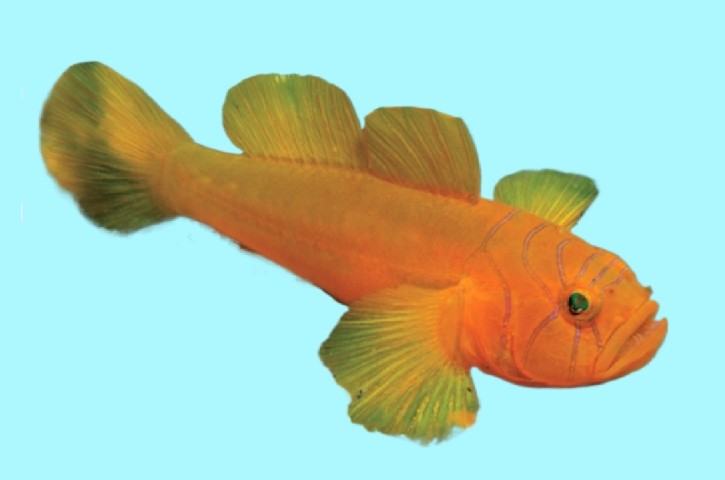
Ornate slippery goby
Lubricogobius ornatus
Ornate slippery goby body depth 2.9-3.9 cm. Anterior nostrils present. Dorsal and ventral margins of caudal …