 Allfishes
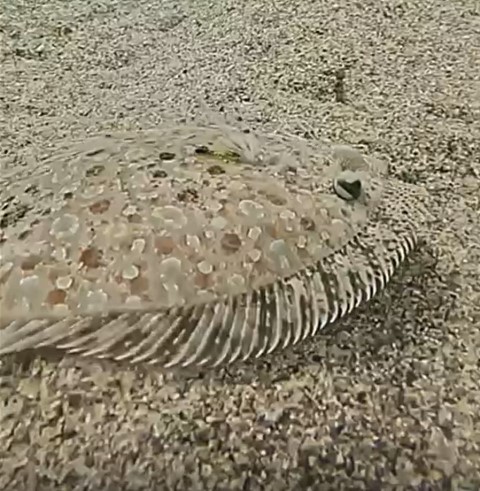
Leopard flounder (Bothus pantherinus)
Latin name
Bothus pantherinus
Other name
Panther flounder
Identification
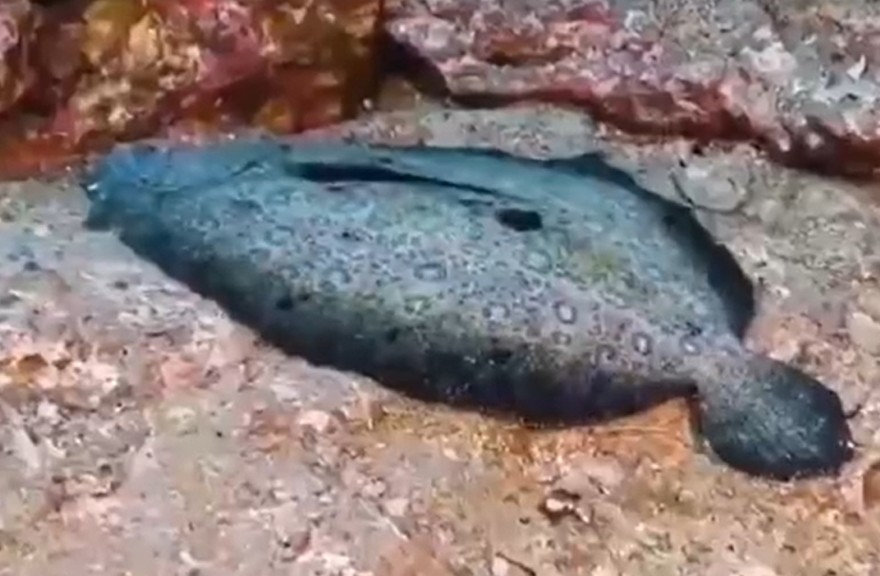
The leopard flounder is a highly compressed fish, one of the left-eyed flounders, meaning that the right eye has moved to the left side of the body.
Features of fish fins
Dorsal spines (total): 0; Dorsal soft rays (total): 84 - 97; Anal spines: 0; Anal soft rays: 61 - 73.
The male has an elongated pectoral fin that signals courtship, territoriality and fear.
Fish colouring
Leopard flounder have dark spots, patches and rings on the side of the eye. A larger dark spot is located in the centre of the straight lateral line.
Distribution
Indo-Pacific: the entire Indian Ocean, including the Red Sea and Persian Gulf to the Hawaiian, Marquesas and Society Islands, north to southern Japan, south to Lord Howe Island. Eastern Mediterranean record incorrect.
Habitat
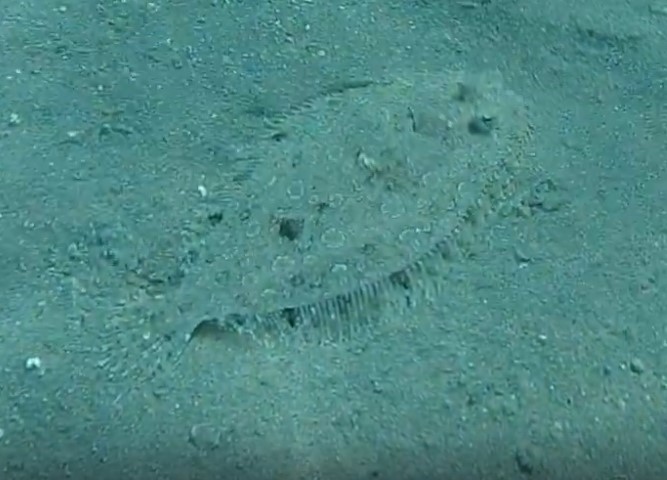
It is a tropical marine bottom dweller. It is often partially buried in the sand of lagoons, bays and sheltered reefs at depths of 3-150 metres (9.8-492.1 feet).
Size
Males of this species reach a maximum length of 39.0 cm and a total length of 20.0 cm.
Behavior
Occupies sandy or silty sands and muddy bottoms of inner reef banks and inshore reefs; juveniles are often found in tidal pools.
Food and feeding habits
Leopard flounders feed on bottom-dwelling animals.
Reproduction
They lay eggs that develop into symmetrical larvae that resemble ordinary fish. As larvae, these fish do not live on the sea floor as adults. They live a pelagic lifestyle, swimming in open water in search of small prey. When they reach the juvenile stage, they undergo a metamorphosis and become bottom dwellers.
Fishing
This species is commercially important for fishing.
Relationship with a person
Harmless. It is used as food fish and processed into fish meal.
Photos
Related species (same family)
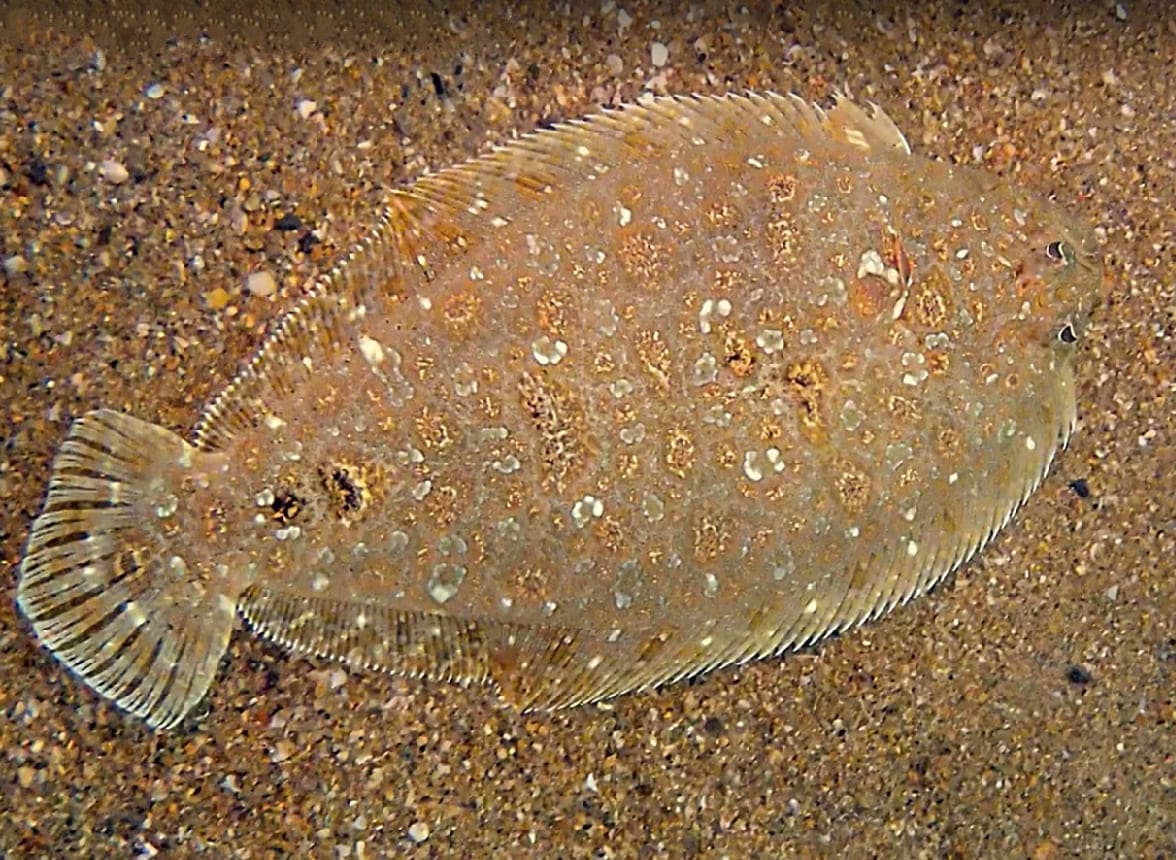
Eyed flounder
Bothus ocellatus
It is a flattened, disk-shaped fish. Like other members of this family, it lies on its …
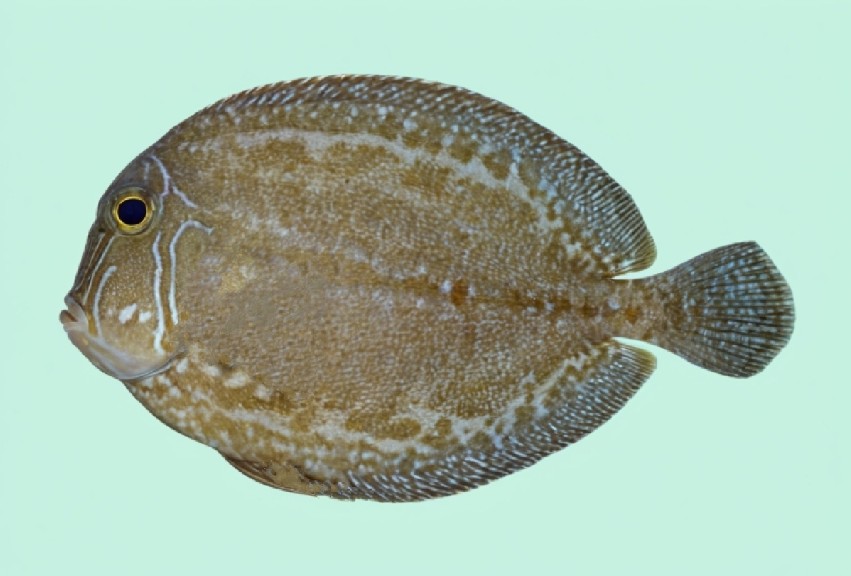
Indo-Pacific oval flounder
Bothus myriaster
The body of the Indo-Pacific oval flounder is oval, strongly compressed. Caudal peduncle narrow, much more …
Peacock flounder
Bothus mancus
The Peacock flounder is also called the flowery flounder because its body is covered with bluish, …