 Allfishes
Half-mourning croaker (Paranibea semiluctuosa)
Latin name
Paranibea semiluctuosa
Other name
Paranibea semiluctuosa
Identification
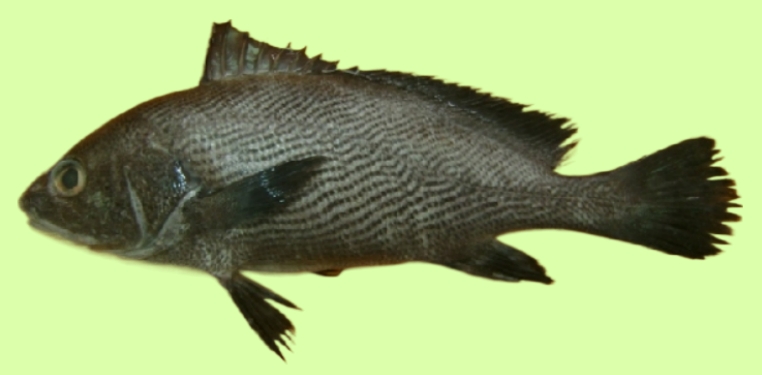
The semi-mourning croaker has a broad body more than three times the standard length, a rounded dorsal profile and a slightly drooping mouth with thick warty lips. All teeth on the lower jaw are of equal size. The swim bladder is carrot-shaped and has branched ramifications along its entire length on each side, with a pair of ramifications in front passing through the transverse septum.
Features of fish fins
The dorsal fin has a shallow notch with 9 or 10 spines anterior to the notch and 1 spike and 27 to 31 soft rays posterior to the notch. The anal fin is supported by 2 spines and 7 or 8 soft rays.
Fish colouring
Colour dark with numerous thin, sinuous black stripes, anal and pelvic fins darker than the rest.
Distribution
Widespread in the Indo-West Pacific, where it can be found in Iran and Pakistan, east of northern Myanmar, it has been recorded in Peninsular Malaysia, but records from further east require verification.
Habitat
A tropical marine benthic species.
Size
The maximum published total length of this species is 40 cm, although 30 cm is more typical.
Behavior
Half-mourning croakers are found on muddy bottoms in coastal waters, although they have been recorded on sandy bottoms in Bangladesh.
Food and feeding habits
Feeds initially on micro-plankton, later on algae, small invertebrates and weedy small fish.
Reproduction
Producers mature in 2-3 years. Spawning is batch spawning; fecundity is 5-500 thousand pelagic eggs. The incubation period is 20 hours (at a water temperature of 22°C), after 2-3 days the fry begin to swim.
Fishing
It is commonly caught in commercial fisheries, particularly in West India, and is also used as by-catch.
Relationship with a person
Harmless. Harvested fish is sold fresh or preserved by drying or salting.
Related species (same family)
Brown meagre
Sciaena umbra
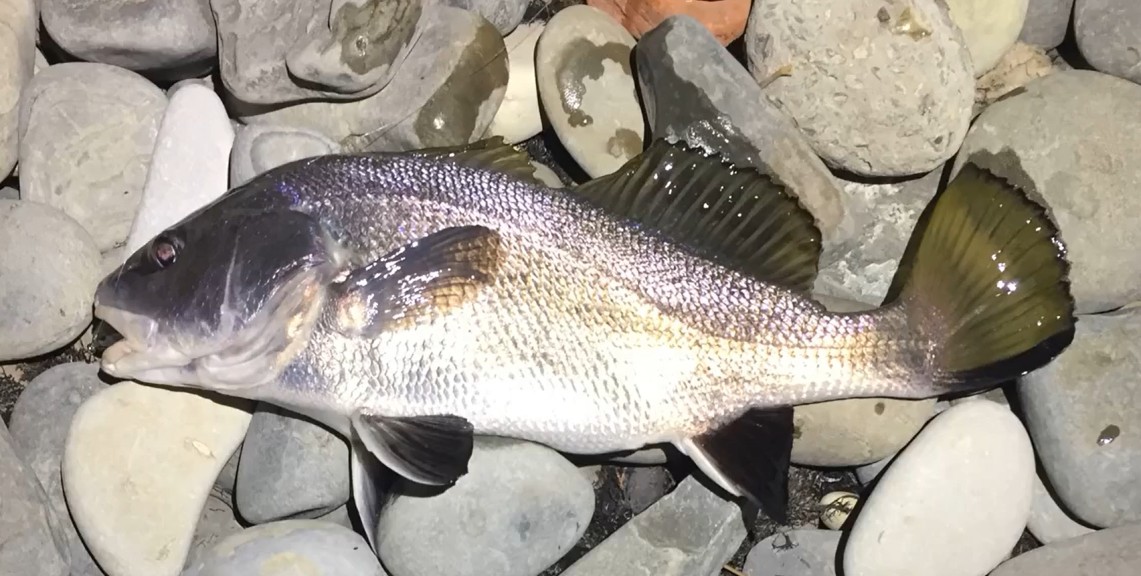
The body of the Brown meagre is elongated, tall, with a humped back, somewhat compressed laterally, …
Corbina, California
Menticirrhus undulatus
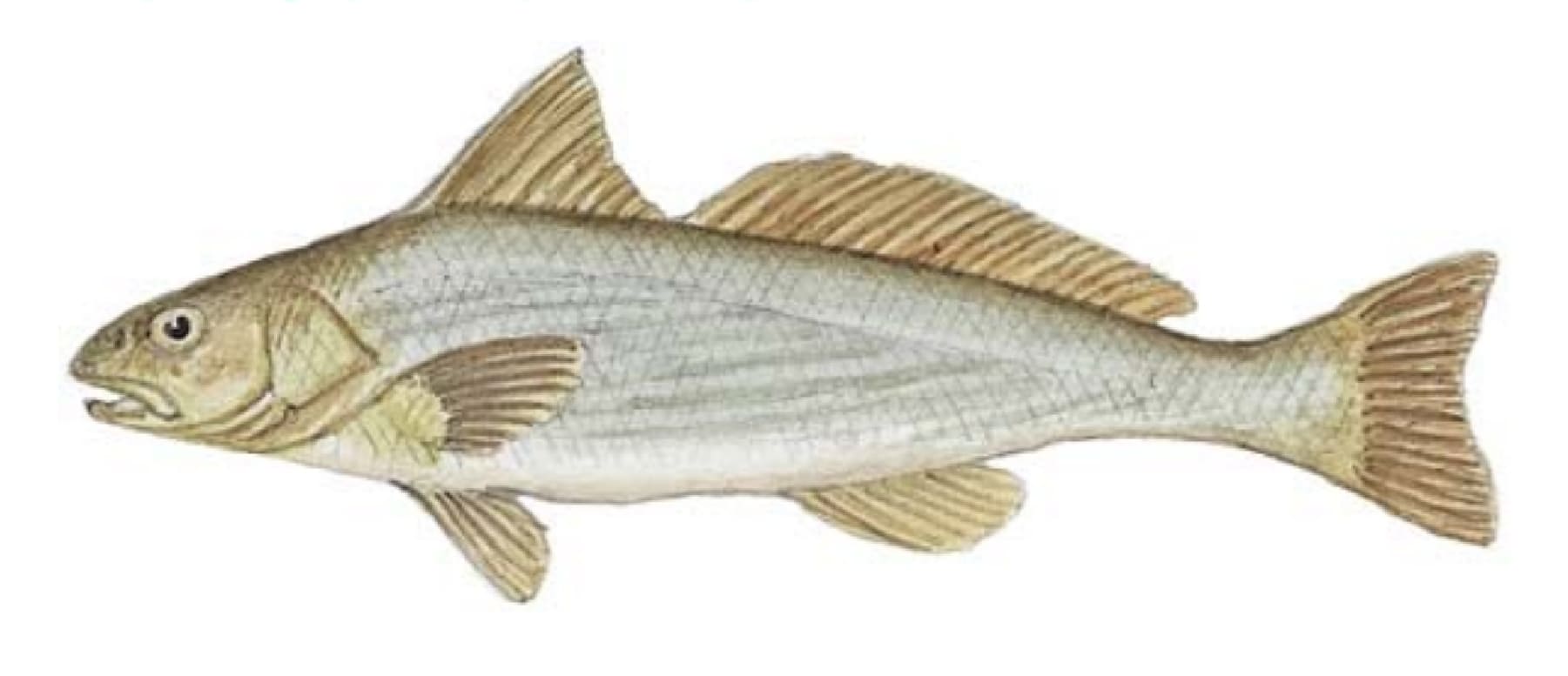
The body of the California corbina is elongated and slightly compressed, with a flattened belly. Its …
Croaker, Atlantic
Micropogonias undulatus
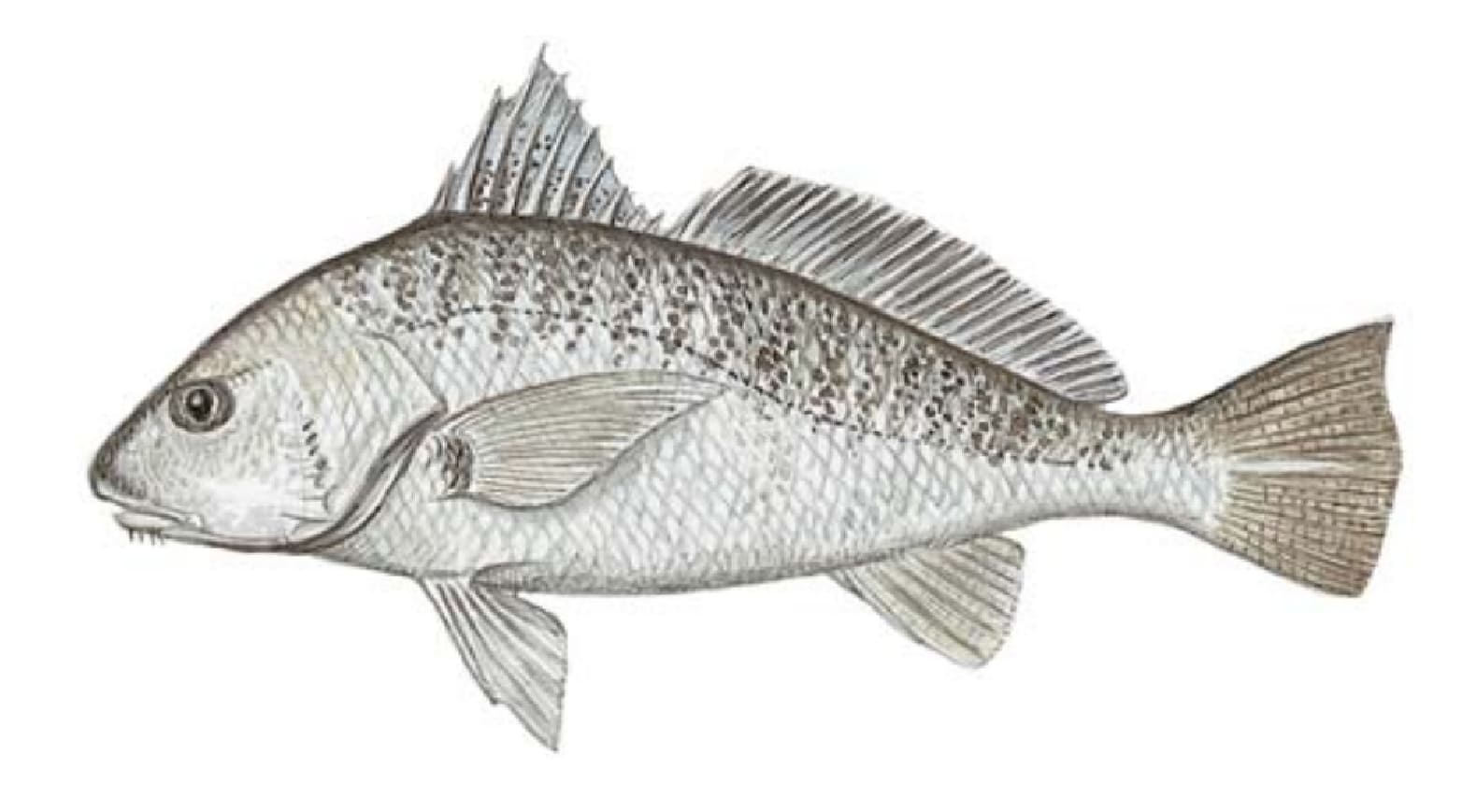
Body is rather massive, back is elevated and compressed. Head is long, snout is protruded forward …
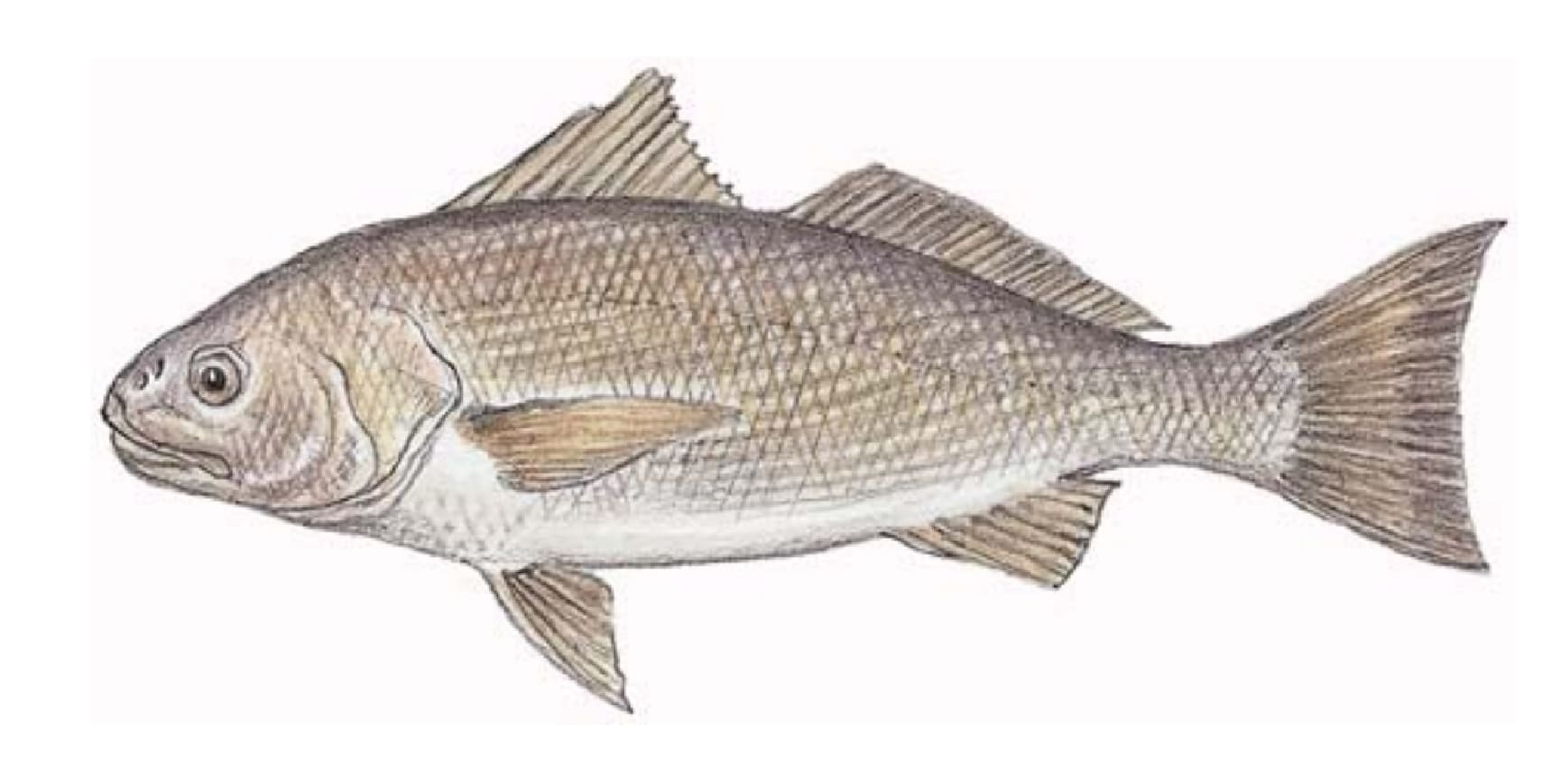
Croaker, White
Genyonemus lineatus
The body of the white croaker is elongated and compressed. The head is oblong and bluntly …
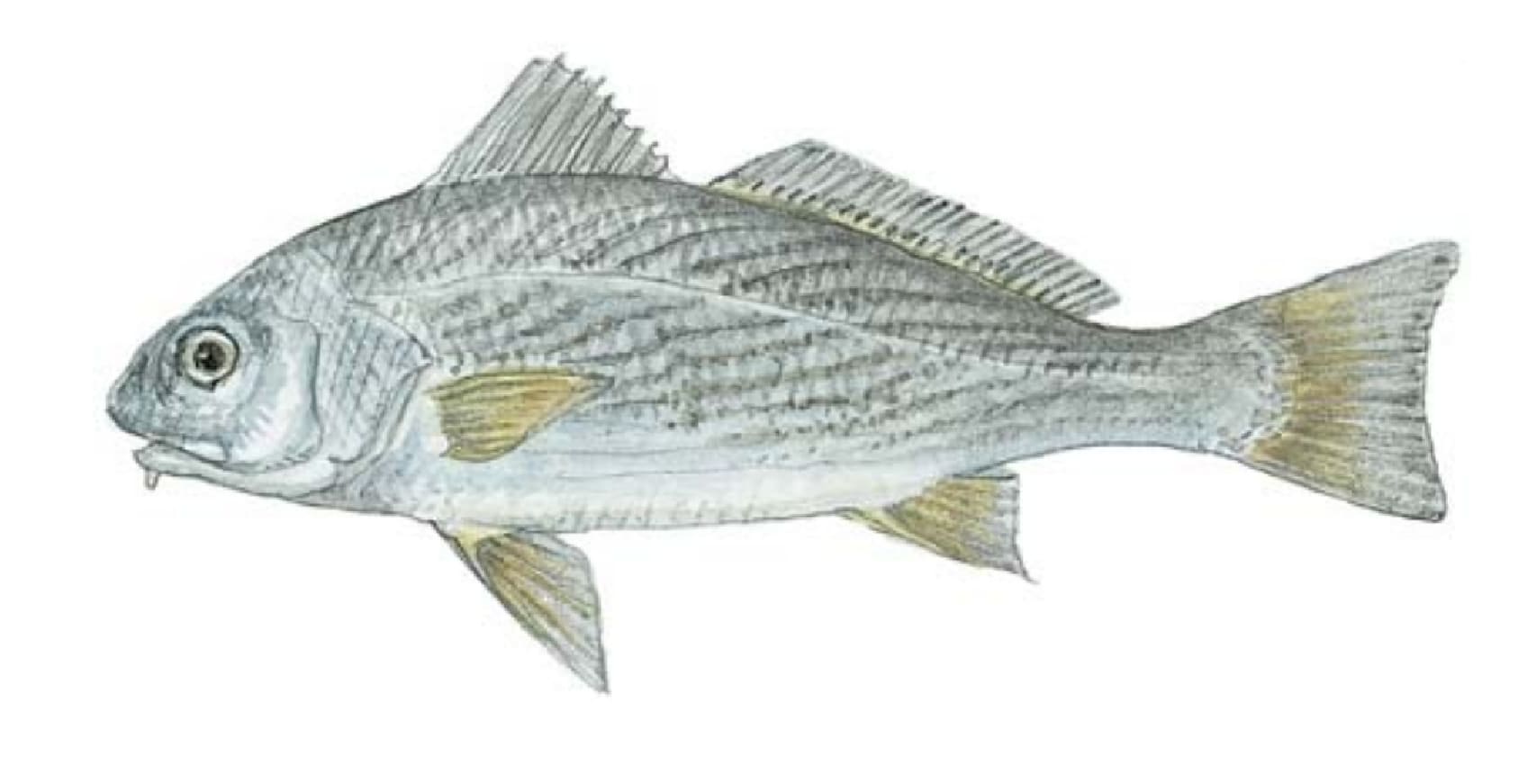
Croaker, Yellowfin
Umbrina roncador
The body of the yellowfin croaker is elliptically elongated, the back somewhat arched, and the head …
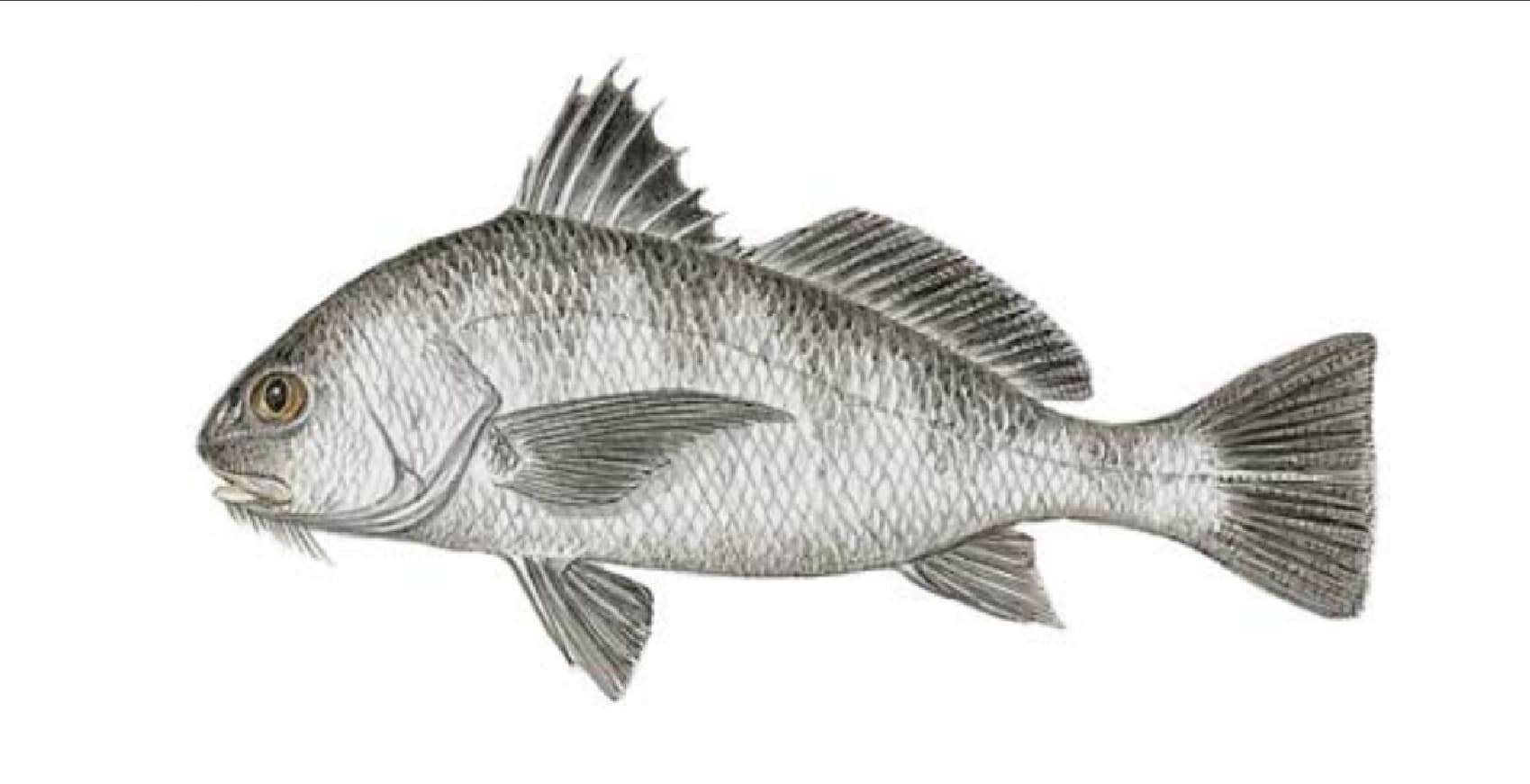
Drum, Black
Pogonias cromis
The black drum has a short, deep, and stocky body, with a high, arched back and …