 Allfishes
Flounder, Gulf (Paralichthys albigutta)
Flounder; Spanish: lenguado tres ojos.
Latin name
Paralichthys albigutta
Other names
Flounder; Spanish: lenguado tres ojos.
Identification
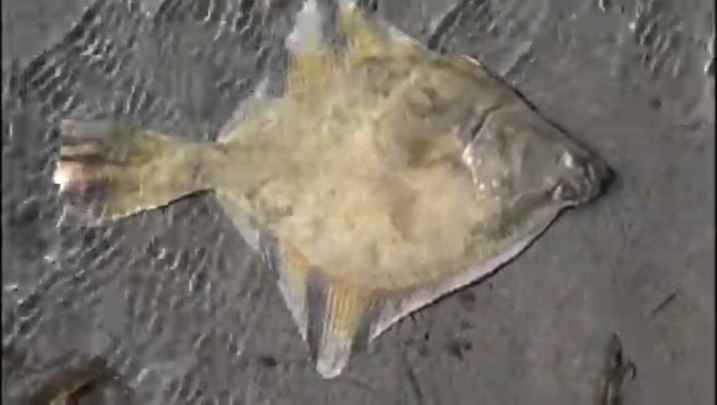
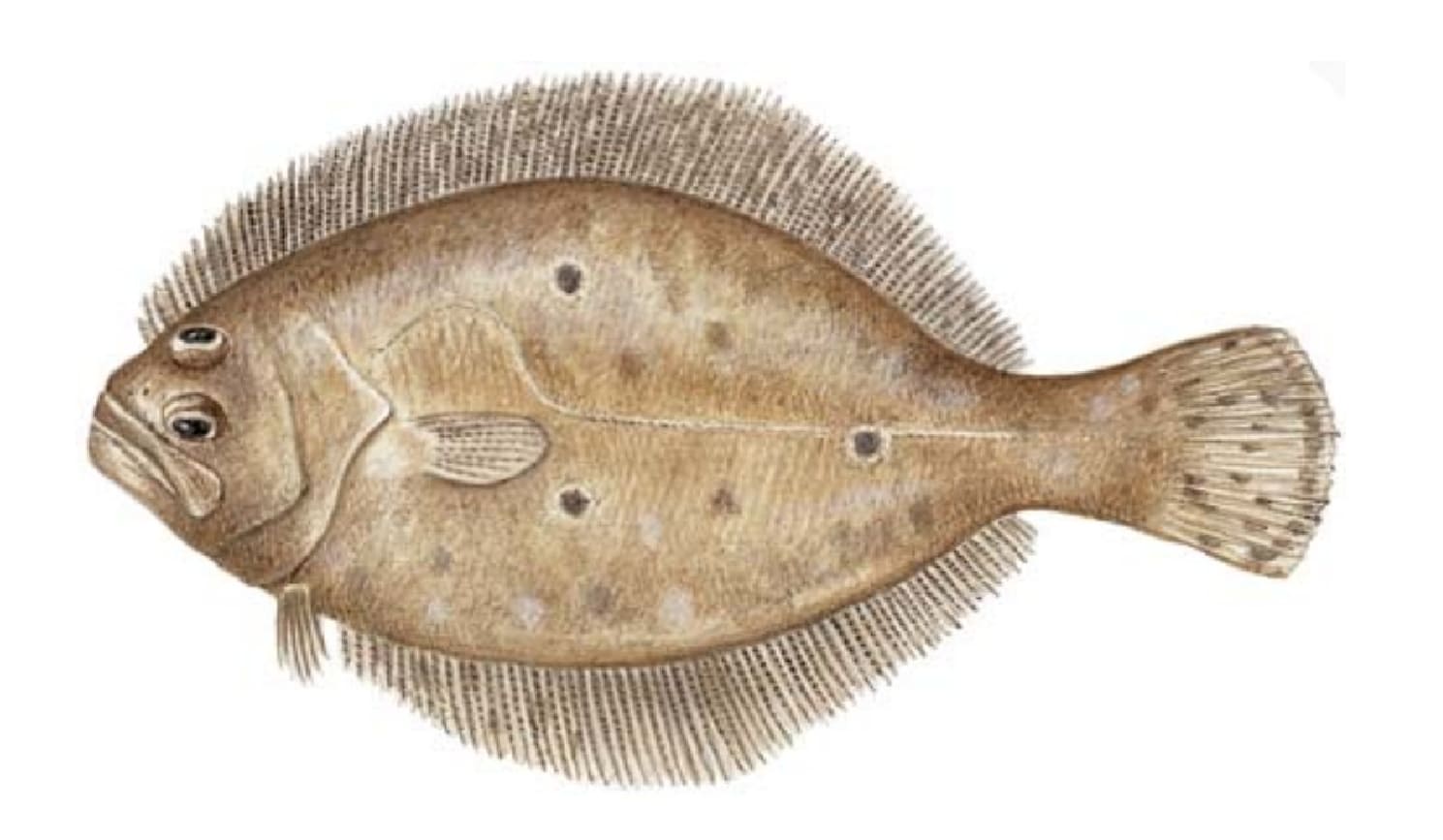
The bay flounder has an olive-brown background and has three distinctive oval spots that form a triangle on the eye side. One spot is above the lateral line, one below and one in the middle. In larger fish, these spots can become indistinct. There are numerous white spots scattered across the body and fins (albigutta means "white-spotted"), and the caudal fin is wedge-shaped with a tip in the middle. This species has 53 to 63 anal rays, which is less than the southern flounder (63-73). Like other flatfish, bay flounder can change color dramatically to match the bottom.
Distribution
Bay flounder is usually found in the same range as the southern flounder. It is common from Cape Lookout, North Carolina, to Corpus Christi, Texas, including southern Florida and the Bahamas.
Habitat
Gulf flounder inhabit sand, coral rubble, and seagrass areas near shore. They often range into tidal reefs and are occasionally found around nearshore rocky reefs. They commonly favor depths of up to 60 feet.
Size
The average fish weighs less than 2 pounds, their length is 6 to 10 inches. It can grow up to 15 inches. It lives at least 3 years. The world record holder of all tackle is a 5 pound fish caught in Florida.
Life history and Behavior
The spawning period is in winter.
Food and feeding habits
The gulf flounder feeds on crustaceans and minnows, fish.
Reproduction
No information