 Allfishes
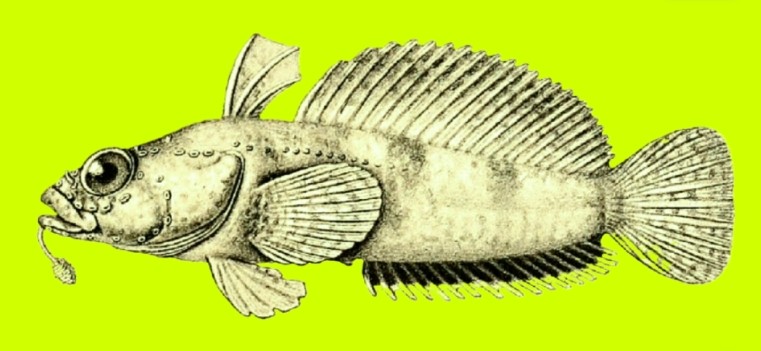
Brainbeard plunderfish (Pogonophryne cerebropogon)
Latin name
Pogonophryne cerebropogon
Other name
Pogonophryne cerebropogon
Identification
Pogonophryne - Greek, pogon = beard + phrynos = toad
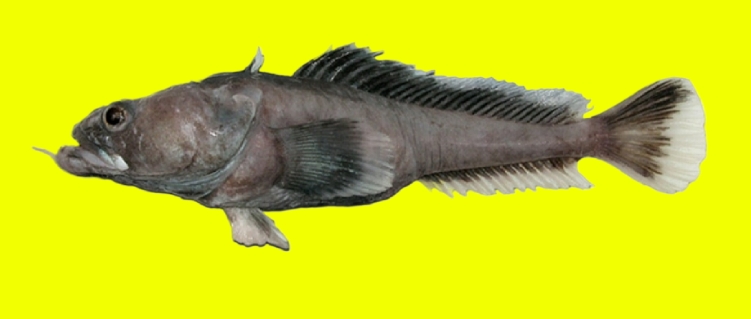
Brainbeard plunderfish have a chin tendril. They have a very large head, no scales on the body (except for the lateral lines), and gill covers with a large flattened spike bent upward and forward. The front of the body is somewhat compressed dorsoventrally, and when viewed from above and below the body has a characteristic bulbous shape similar to that of an amphibian tadpole.
Features of fish fins
These fish have 2 dorsal fins, the first containing 2-7 spines and the second containing 22-30 segmented soft rays, while the anal fin has 14-21 soft rays. They have large pectoral fins with 14-21 rays, while the pelvic fins are located at the jugular and contain a long spine and 5 soft rays. The caudal fin has 8-11 rays.
Fish colouring
The body colour of this species is gray.
Distribution
Endemic to the bathyal waters of the high-latitude zone of the Southern Ocean. Widespread in the Ross Sea.
Habitat
A deep-sea marine species with a habitat depth range of ?-300m.
Size
The maximum length of this species is 25.0 cm.
Behavior
Brainbeard plunderfish lead a slow and sedentary lifestyle, usually lying motionless on the bottom for long periods of time waiting for prey to approach.
Food and feeding habits
Predators that feed on both living organisms and carrion.
Reproduction
No data are available on the breeding biology of this species.
Fishing
This species is of no interest to fisheries.
Relationship with a person
Harmless.
Related species (same family)
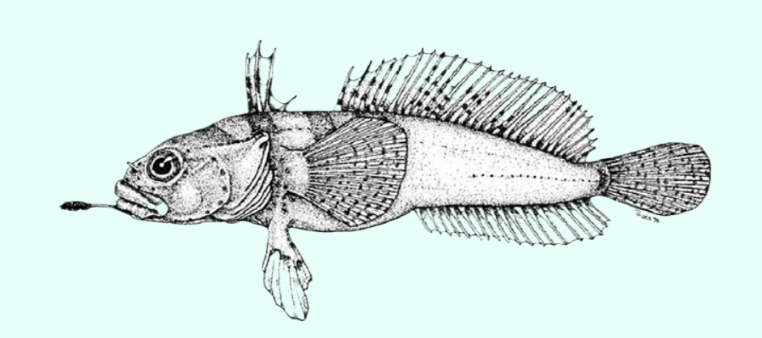
Artedidraco glareobarbatus
Artedidraco glareobarbatus
The genus is named in honour of the "father of ichthyology" - the Swedish ichthyologist Peter …
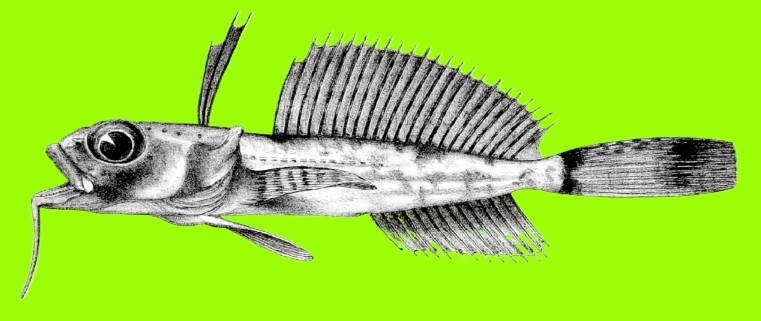
Dolloidraco longedorsalis
Dolloidraco longedorsalis
The body of Dolloidraco longedorsalis is elongated, compressed at the sides, low, its height is about …
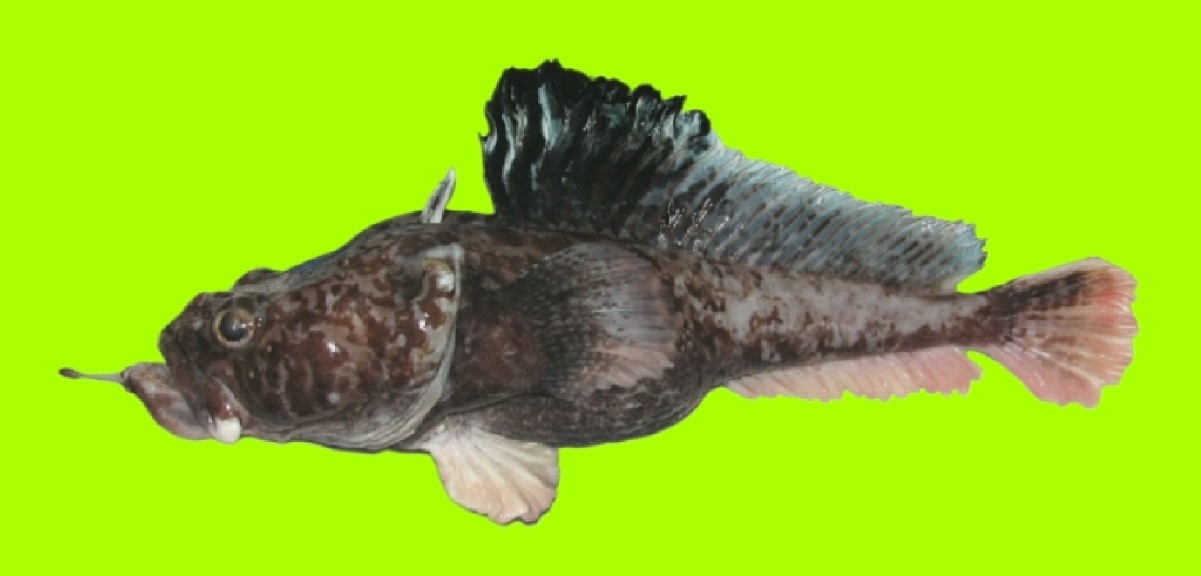
Hopbeard plunderfish
Pogonophryne neyelovi
The species name Hopbeard plunderfish refers to the peculiar structure of the fish's chin tendril, the …
Spotless plunderfish
It belongs to the species group "P. albipinna". It differs from other species of the group …
Whitefin plunderfish
Pogonophryne albipinna
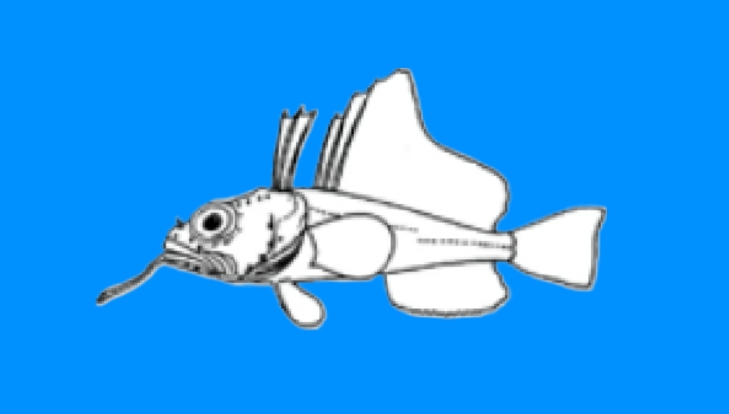
Pogonophryne - Greek, pogon = beard + Greek, phrynos = toad; albipinna - from Latin albus, …