
Latin name
Mullus ponticus, mullus barbatus ponticus
Other name
Red mullet, striped mullet
Identification
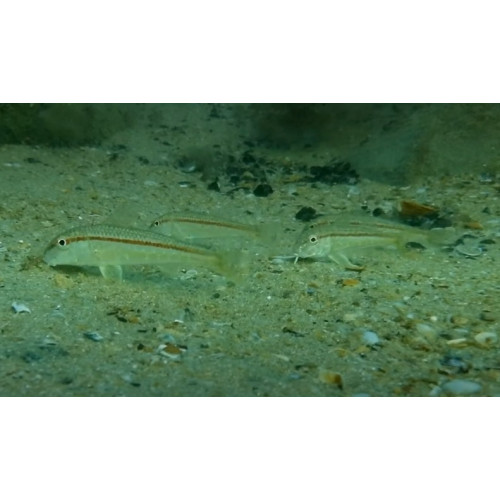
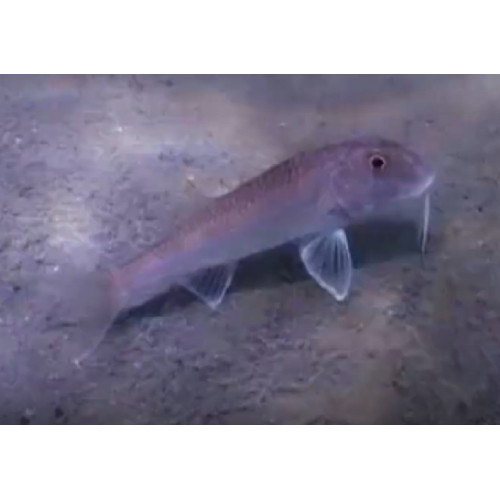
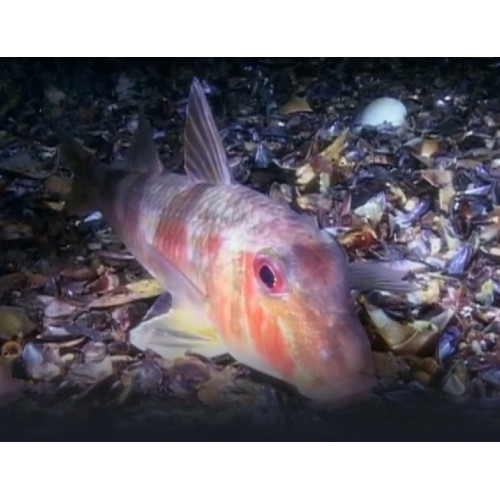
The body of the Blunt-snouted mullet is slightly compressed and elongated. The mouth is small and positioned inferiorly; the dentition varies, but teeth are typically few in number. On the chin, there are two barbels located at the front of the hyoid bone, which the fish uses to "sift" through the sand in search of crustaceans and mollusks. The throat and the front part of the head are not covered in scales, while the rest of the head and the entire body are covered with large, finely serrated scales.
Features of fish fins
This species has two dorsal fins, the second of which is similar in shape and size to the anal fin.
Fish colouring
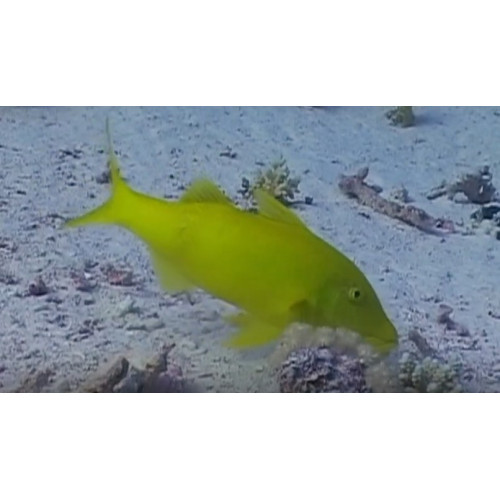
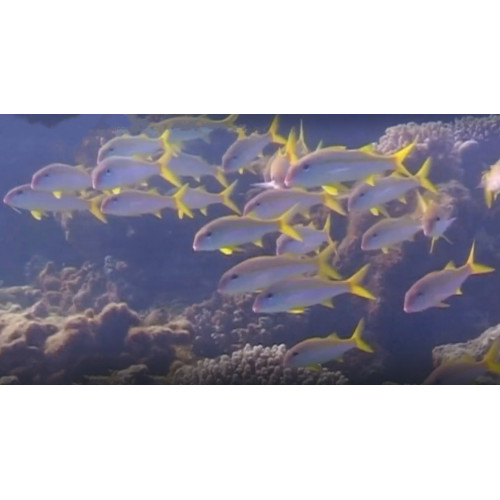
The basic body color is red with lighter yellow and silvery highlights, the belly is silver, and the fins are yellow.
Distribution
It is endemic to the Black Sea and the Sea of Azov. It prefers a temperate climate; 47°N - 41°N, 27°E - 42°E.
Habitat
It is a marine boreal demersal fish. It lives within the continental shelf zone at depths of up to 100 meters, usually in shallow waters at a depth of 15-30 m. It is a typical bottom-dwelling fish, constantly staying near the seabed and never rising into the water column. It is found over all types of Black Sea and Azov Sea bottom substrates, but prefers soft muddy, sandy, or shell-strewn grounds; it is less frequently found over rocky bottoms.
Size
The total body length of these fish reaches up to 22 cm, typically 8.4—11.8 cm, and their body weight can reach up to 161 g.
Behavior
At night, the Blunt-snouted mullet hunts for benthic invertebrates, while during the day it rests, half-buried in the sand and adapting its coloration to the color of the substrate. Its coloring can change from red-orange to dark green, making the fish inconspicuous against any bottom color.
Food and feeding habits
It feeds on small benthic invertebrates: crustaceans, worms, and mollusks. However, polychaetes are its most preferred type of food. It feeds most actively in the morning hours during the summer; feeding activity decreases sharply in winter.
Reproduction
Spawning is batch-type; during the spawning season from May to September, a single female releases 3-4 portions of eggs at intervals ranging from one to several days. They spawn at depths of up to 50 m during the nighttime. The eggs are pelagic.
Fishing
This species is commercially important for fishing.
Relationship with a person
Harmless. The meat of the Blunt-snouted mullet is tender, fatty, very juicy, and has an exceptional, uniquely sweet flavor.
| Classification | |
| Phylum | Chordata |
| Class | Actinopterygii |
| Squad | Mulliformes |
| Family | Mullidae |
| Genus | Mullus ponticus |
| Species | M. ponticus |
| Features | |
| Conservation status | Not Evaluated |
| Habitat | Bottom |
| Life span, years | No information |
| Maximum body weight, kg | 0,161 |
| Maximum length, cm | 22 |
| Sailing speed, m/s | No information |
| Threat to people | Edible |
| Way of eating | Bentophage |
Blunt-snouted mullet
Tags: blunt snouted mullet