
Latin name
Mormyrus longirostris
Other name
Bottle-nose
Identification
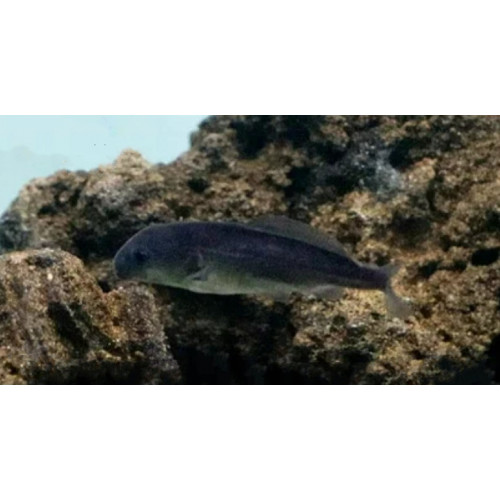
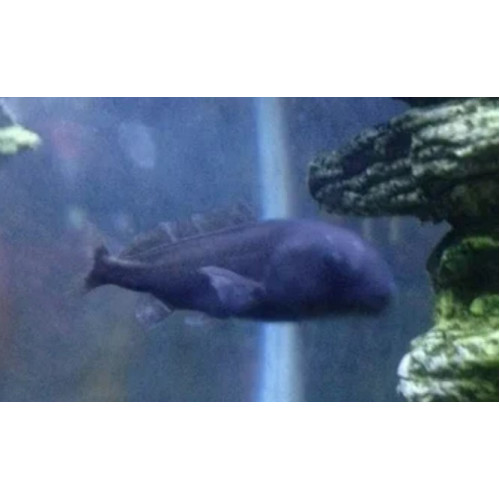
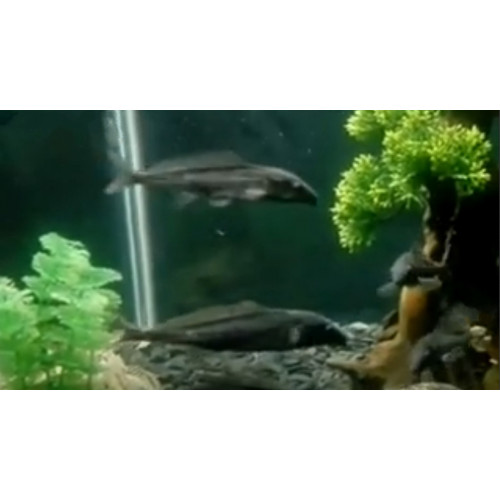
The eastern bottle-nosed mormyrid has such a distinctive appearance that it cannot be confused with any other fish. Its body is elongated, drawn out, compressed laterally, especially in the caudal section. The most notable feature is its long, tube-shaped, downward-curved "nose" (elongated snout), for which the fish is called the "elephant-snout fish" or "long-nosed mormyrid." This structure is used for searching for food in the mud. The head, when viewed from the side, has a characteristic curved line. The eyes are small and poorly developed. Because vision is useless in murky water, these fish rely heavily on their electric sensory organs, which have become their primary survival tool, leaving their eyes underdeveloped. The mouth is small, terminal, and located at the tip of the "snout." Females are generally smaller and have a deeper (higher) body compared to males.
Eastern bottle-nosed mormyrids possess a unique ability to generate weak electric fields for orientation and foraging. On their caudal peduncle, they have an electric organ that generates weak electrical impulses, creating an electromagnetic field around the fish's body. Electroreceptors on the skin (especially on the head) detect the slightest distortions of this field caused by the movement of prey, a predator, or an obstacle. This system acts like a radar, allowing the fish to hunt effectively in complete darkness and murky water. Interestingly, the fish is so sensitive that it reacts even to the approach of a human (our bioelectric currents) and especially sharply to the electric discharges of a comb. When in danger or when caught, the fish can deliver a mild electric shock to disorient the predator.
These are very ancient fish; their fossil relatives have been known since the Cretaceous period. They belong to the superorder Osteoglossomorpha (bonytongues), which also includes the famous arowanas.
Features of fish fins
The dorsal fin is very long, located almost along the entire back from the head to the caudal peduncle, and contains 65–75 soft rays. The anal fin is short (17–19 rays). The caudal fin is forked, with the electric organ located on its upper lobe. The pectoral and pelvic fins are small and positioned closer to the head.
Fish coloring
Coloration is olive-gray, brownish, or dark gray on the back and sides, with the belly significantly lighter. The uniform coloration helps with camouflage in murky water.
Distribution
This species is widely distributed in the freshwater bodies of East and Southern Africa. It is found in the basins of the largest rivers — the Zambezi and Congo (upper and middle reaches) — as well as in the great African lakes: Malawi, Tanganyika, and Rukwa. It inhabits the territories of Zambia, Zimbabwe, Mozambique, Tanzania, the Democratic Republic of Congo, and Malawi.
Habitat
A demersal (bottom-dwelling) species. It prefers deep areas with a gentle current and a soft, muddy bottom. It may stay in caves, among rocks, or in beds of aquatic vegetation, where it seeks shelter during the day.
Size
This is a fairly large fish, reaching a length of 75 cm (30 inches) and a weight of 10 kg (22 lbs). Sexual maturity is reached at a length of about 34 cm (13 inches). The exact maximum lifespan in the wild has not been scientifically recorded, but based on indirect data and the biology of the species, it may range from 6 to 10 years or more.
Behavior
They lead a solitary or schooling (in small groups) lifestyle. During the day, they hide in shelters and are relatively inactive.
Their weak electric field allows them not only to find prey and navigate but also to communicate with conspecifics, distinguishing the individual "electric signature" of each fish.
Food and feeding habits
A nocturnal predator that emerges to hunt at dusk and feeds actively during the dark hours.
Their diet is varied and depends on the size of the individual. They feed mainly on benthic invertebrates — chironomid larvae (bloodworms), small crustaceans, worms, and mollusks, which they dig out of the mud with their long snout. Larger individuals may eat small fish, eggs, and fry, as well as aquatic plants ("weeds") and detritus.
Reproduction
Reproduction in the wild has been insufficiently studied, and they hardly breed in captivity. Spawning occurs during the rainy season when water levels in rivers rise. The fish undertake short upstream migrations to spawn. A single female spawns between 10,000 and 70,000 eggs. The male builds a nest from plants and guards the clutch. There is evidence that eggs may be laid at the entrance of a cave, after which the male carries them inside.
Fishing
The meat of these fish is edible, and in African countries, they are a target of local fishing (hook and line). However, they have no major commercial value.
Relationship with a person
This species is used in aquariums, but its care is extremely difficult and is recommended only for experienced aquarists.
| Classification | |
| Phylum | Chordata |
| Class | Actinopterygii |
| Squad | Osteoglossiformes |
| Family | Mormyridae |
| Genus | Mormyrus |
| Species | M. longirostris |
| Features | |
| Conservation status | Least Concern |
| Habitat | Bottom |
| Life span, years | 10 |
| Maximum body weight, kg | 10 |
| Maximum length, cm | 75 |
| Sailing speed, m/s | No information |
| Threat to people | Edible |
| Way of eating | Predator |