
Latin name
Hypophthalmichthys nobilis
Other Names
The bighead carp is a large freshwater fish belonging to the minnow family (Xenocyprididae). Its scientific name, Hypophthalmichthys nobilis, was given by Richardson in 1845. It is also known by the synonym Aristichthys nobilis. It is one of four non-native fish species referred to collectively as invasive carp in North America.
Identification
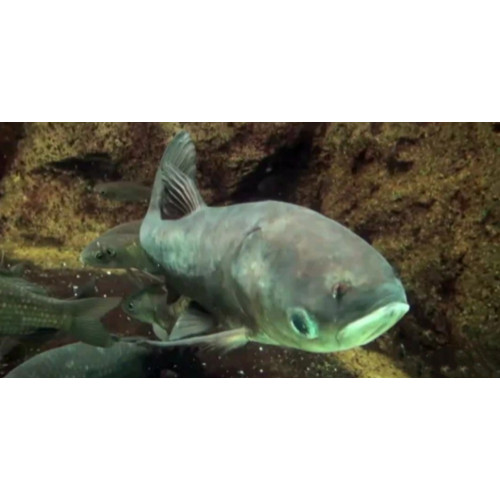
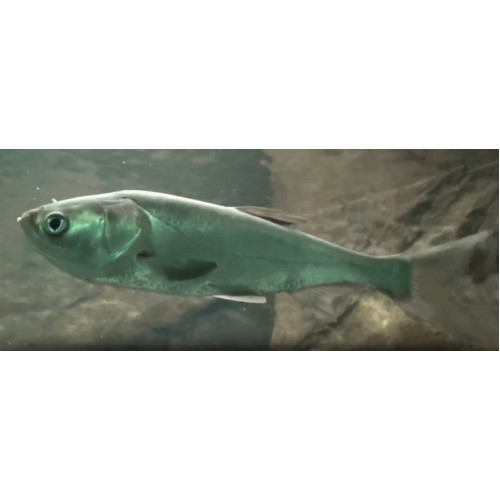
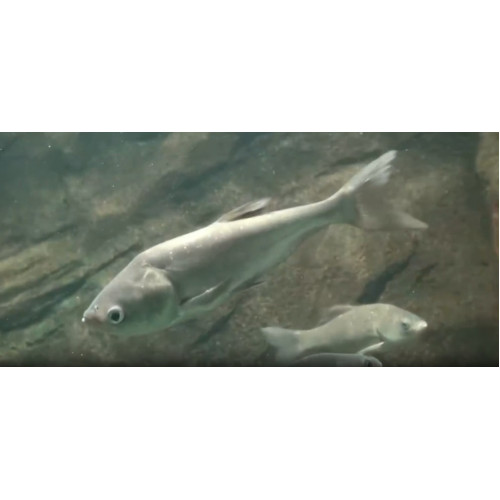
The bighead carp has a deep, laterally compressed body with a characteristically very large head, which gives the species its common name. The mouth is large and toothless, positioned terminally or slightly downturned, with the eyes located below the midline of the body. A key identifying feature is the long, comb-like gill rakers that are closely set, allowing the fish to efficiently strain plankton from the water. The body is covered with very tiny scales, while the head and gill covers are scaleless. The belly has a keel that extends from the anal fin to the pelvic fins, but not all the way to the head, distinguishing it from the similar silver carp.
Features of Fish Fins
The bighead carp has a relatively short dorsal fin with 7–10 soft rays and an anal fin with 12–14 soft rays. The pelvic fins are located in the abdominal region. The caudal fin is forked, typical of many cyprinids. The species lacks spines in its fins.
Fish Colouring
Adults are generally dark grey to olive-brown on the back and upper sides, with dark irregular blotches along the body. The belly and lower sides are silvery to whitish. The coloration can vary depending on habitat and water conditions.
Distribution
The bighead carp is native to eastern Asia, from the Amur River in far eastern Russia south through the major river basins of China and into North Korea. It has been widely introduced around the world, including Mexico, Central and South America, Africa, Europe, and elsewhere in Asia. In the United States, it was first introduced in the 1970s and is now established in the Mississippi, Missouri, and Ohio River basins, with populations in at least 18 states.
Habitat
This species is eurythermic and can tolerate a wide range of water temperatures, from approximately 0.5°C to 38°C (33°F to 101°F). It inhabits the upper layer of freshwater rivers, large streams, lakes, and reservoirs, preferring slow-flowing or standing waters with abundant planktonic food. For successful spawning, it requires large, turbulent rivers with high water volume and warm temperatures (around 25°C / 77°F).
Size
The bighead carp can grow to a maximum length of about 1.5 meters (5 feet) and can weigh up to 40 kg (90 lbs). It is a fast-growing species that can reach marketable size (over 1.5 kg) in tropical and subtropical areas. It matures in 2–3 years.
Behavior
The bighead carp is a schooling fish that spends most of its time in the upper water column. It is an active filter-feeder, pumping water through its buccal cavity and straining food particles with its specialized gill rakers. It lacks a true stomach, so it feeds almost continuously to meet its nutritional needs. It is a voracious consumer of plankton. During spawning, adults migrate upstream to large rivers in the spring and summer.
Food and Feeding Habits
The bighead carp is a filter-feeding omnivore that primarily consumes zooplankton, but also feeds on detritus, phytoplankton, and small invertebrates such as aquatic insect larvae. It feeds by pumping water into its mouth and using its long, comb-like gill rakers to strain out food particles. This feeding strategy allows it to consume a wide range of planktonic organisms.
Reproduction
The bighead carp is an oviparous, open-water spawner. Females can produce a large number of eggs, with larger individuals capable of producing up to one million eggs per spawning event. Spawning occurs in spring and summer, following flood events when water levels rise and temperatures reach about 77°F (25°C). The eggs are pelagic and develop while drifting in the water column. After spawning, adults do not provide parental care. The species can hybridize with the closely related silver carp, producing viable offspring.
Fishing
The bighead carp is a highly valued food fish, particularly in China, where it ranks as the fifth largest cultured freshwater fish globally, with an annual production exceeding 1.7 million tonnes. It is commonly marketed fresh, either as whole fish or in pieces. The meat quality is considered better when the fish is harvested at a larger size (>1.5 kg). The head is highly prized for making soup. However, in many regions where it has been introduced, such as North America, it is considered an invasive species, and its importation and possession are strictly regulated or prohibited.
Relationship with a Person
The bighead carp is not a threat to humans as a predator. However, it poses a significant ecological threat in areas where it has been introduced. Its voracious feeding habits allow it to outcompete native fish species that rely on the same planktonic food sources, disrupting aquatic food webs and affecting commercial and recreational fisheries. In the United States, it is federally listed as an injurious species under the Lacey Act, making it illegal to import or transport live bighead carp across state lines. The species faces no major threats in its native range and is listed as Least Concern on the IUCN Red List.
Interesting facts
The homeland of the bighead carp is the rivers of China. It feeds mainly on zooplankton, which it filters from the water with its gills, just as the silver carp filters algae. It grows faster than the silver carp and reaches 20 kilograms (44 pounds). In China, these fish have long become domestic, raised in lakes, ponds, and even in bamboo cages.
| Classification | |
| Phylum | Chordata |
| Class | Actinopterygii |
| Squad | Cypriniformes |
| Family | Xenocyprididae |
| Genus | Hypophthalmichthys |
| Species | Hypophthalmichthys nobilis |
| Features | |
| Conservation status | Least Concern |
| Habitat | Benthopelagic |
| Life span, years | No information |
| Maximum body weight, kg | 40 |
| Maximum length, cm | 150 |
| Sailing speed, m/s | No information |
| Threat to people | Edible |
| Way of eating | Planktonophage |
Bighead carp
Tags: bighead carp